Virginia Home Grown
Fungus Farming
Season 26 Episode 7 | 56m 46sVideo has Closed Captions
Learn how mushrooms are grown in natural and climate-controlled environments!
Tour Rock Run Creek Farm in Goldvein to see how shiitake mushrooms are grown on logs. Visit North Side Growers in Louisa to discover techniques for raising Blue Oyster, Lion’s Mane and other varieties of shrooms indoors. Engage with us or watch full episodes at Facebook.com/VirginiaHomeGrown and vpm.org/vhg. VHG 2607 September 2026.
Problems playing video? | Closed Captioning Feedback
Problems playing video? | Closed Captioning Feedback
Virginia Home Grown is a local public television program presented by VPM
Virginia Home Grown
Fungus Farming
Season 26 Episode 7 | 56m 46sVideo has Closed Captions
Tour Rock Run Creek Farm in Goldvein to see how shiitake mushrooms are grown on logs. Visit North Side Growers in Louisa to discover techniques for raising Blue Oyster, Lion’s Mane and other varieties of shrooms indoors. Engage with us or watch full episodes at Facebook.com/VirginiaHomeGrown and vpm.org/vhg. VHG 2607 September 2026.
Problems playing video? | Closed Captioning Feedback
Where to Watch Virginia Home Grown
Virginia Home Grown is available to stream on pbs.org and the PBS app.
Providing Support for PBS.org
Learn Moreabout PBS online sponsorship(bright upbeat music) (bright upbeat music fades) (birds chirping) >>High life expectancy of the white oak.
Five years before it really breaks down.
Red oak, pin oak, all of those with the light bark, maybe four years.
Everything else, hickory, maybe two years.
>>She's usually harvesting Saturday morning before market.
>>Yeah, before market.
>>People love it when they're like, "Yeah, these were harvested two hours ago."
They're like, "Wow!"
>>So I'll be up at five in the morning harvesting and just boxing these things up for wherever they need to go.
>>Production funding for "Virginia Home Grown" is made possible by... Strange's Florist, Greenhouses, and Garden Centers, serving Richmond for over 90 years.
With two florist shops, two greenhouses, and a garden center located throughout the Metro Richmond area.
Strange's, every blooming time.
And by Sally R. Youngs in honor of the Grateful Deadheaders Resident Interest Group.
And by... (birds chirping) (bright and relaxing music) (bright and relaxing music continues) (bright and relaxing music continues) (bright and relaxing music fading) >>Welcome to "Virginia Home Grown."
I feel like celebrating as one of the hottest summers on record becomes a memory.
While some folks are putting their tools away, I'm taking mine out because fall is for planting.
Today, we are exploring fungus farming to learn about different methods for cultivating edible mushrooms.
From shrooms to anything else you grow, send in your gardening questions at vpm.org/vhg.
We always enjoy hearing from you.
A little later, we will visit growers producing mushrooms in a climate-controlled environment.
But, first, Serome Hamlin visited Rock Run Creek Farm, in Goldvein, to meet Francis Ngoh and learn about growing shiitake mushrooms from logs in a natural forest setting.
Let's get going.
>>Hey, Francis.
We're walking around in your woods and can you explain what is going on with all of the logs you got?
>>Well, welcome to Rock Run Creek Farm.
And I started the farm on the basis that I had some product and the product was shiitake mushrooms to start with.
Okay, everything else is outside of that, but this is where the passion is.
So I learned through the process of producing shiitake mushrooms that you need fresh logs to be able to grow it in there, thus the name shii and take.
So oak mushroom.
And so to be able to do it, I don't do substrate production, but I do fresh logs.
>>Straight from the logs.
>>Yes, fresh from the logs.
>>And preferably oak.
>>Oak.
Oak is the best.
White oak is the actual best of it.
Everything else pales in comparison because of the longevity of the wood.
And this is a five-year process with the oak, and even the premium of it is the white oak because the layers are over each other.
So once it starts cracking, then you get mushrooms, but they're very resilient in keeping the bark together, which helps anchor the mushroom to come out.
>>Okay.
>>So we have to fell the log, make sure that the cambium layer is fresh.
And then, as soon as we cut it, the time starts ticking.
>>So the cambium layer is actually moving the fungi throughout.
>>That's it.
Yes, yes.
If the cambium layer is dead, nothing moves, because it's the natural process.
>>I see, here, we're starting to get a few mushrooms starting.
>>Yes, you have some pins.
And so, within two weeks, this will look totally different.
>>They're starting to come in.
So the mushrooms prefer a cooler season?
>>Yes.
It's a strain.
It's called night velvet.
And night velvet is a fall strain.
That's why beginning of fall, going towards the middle fall, this whole place will be loaded with mushrooms.
And all the logs all over the place are in different years.
This is the first of this year, which is from last year.
And then, we'll go into two years ago and three years ago, and then they keep rotting and going, and then we- >>So the production, as the years go on, the production of the actual mushrooms in the particular logs would start slowing down as it ages?
>>Yes, exactly.
They start and hit a peak, and the peak is about two, two-and-a-half years, or three years.
And then, it kind of goes down, because the log gets very aged, the elements fall off.
The cambium layer is where everything resides, goes away.
So you see how it comes, and you see the destruction by the- >>The wildlife.
>>The wildlife eats some of it, too.
But as soon as it becomes abundant, you will see it all over the place and it can't eat at all, so we share.
>>Yes, so you gotta share with nature a little bit.
>>Exactly, 'cause it's outside, it's open.
I don't have anything like netting on it or I don't have plastic on it, and that's the natural way.
>>And I see you've got a production area over here where there's logs that haven't been drilled yet.
Can you explain how you get from your natural logs to actual production of the mushrooms?
>>Well, I mean, okay, it has to be at the comfort of the producer so that it can last for as long, as big as the pile is and everything else.
So I have this set up and I set my ladder here, and the way the wood is cut, it's cut to size so it just falls in place.
All right, so I come here and that's my working environment.
First thing to do with this is lay out the logs just as they are.
And then, next thing for me is like, okay, I have a fast drill.
(drill whirring) >>Oh wow.
>>And I drill some holes.
(drill whirring) Right?
>>That's a really good bit.
So it's specially designed just for this?
>>The drill bit is such that this fits right on top of the hole I have drilled, and then- >>It all just goes in, so you push it in- >>So the process is I have this, this is like a spring-loaded thing.
See that?
It fills that gap.
>>Let's see some.
>>See?
Okay.
>>So this sawdust is inoculated with the spores.
>>Yes.
That's what's gonna fill the gap.
And I can show you, you see it come into your hand when you look at it like that, flush.
>>So you just push it right in.
>>You push it right in, do the next, and everything is all speed dependent because, again, time, you know?
>>So you've got to use this before the cambium layer dies out, so you've got a very limited amount of time?
>>Yes.
It's an active layer.
So as soon as I put it in there, the wetness of it goes through and then has the connection.
As it has the connection, it's absorbed into the wood, in the cambium layer.
Because the cambium layer is fresh, what happens is it still thinks that it's supporting the tree.
The old-fashioned way is to put wax on it, but since we have a lot of it, we just pile it up.
By the time insects, ants, whatever else wants to suck it up, it's already in the wood.
>>Oh, so the wood is already taken up, so you don't have to- >>You've inoculated the wood and that is it.
>>'Cause that was gonna be one of my questions is worried about covering the top, but if it's already in, it's already getting into- >>If I did this as a solo and kept it like this, I'm gambling on time because everything is exposed, and the elements, natural, you know, ants and everything else can go and eat it up.
But the idea is that once I do that, and you see the product, just like all the other ones, I don't have to worry about anything invading them.
If you pile it on top, that's the better, which means you exclude those holes from being sort of foraged or whatever it is, and that's the natural process that I like is this.
>>So if a homeowner wants to get started with growing mushrooms on their own, what would be good tips to get them started?
>>It is a slow process.
Setting up is very methodical, starting from actually getting the logs.
Nobody wants deforestation, but if you have the logs and you're doing forest management, you can find the logs, one tree here, one tree there.
Make sure you have enough time so that when the tree is fell, you can utilize all the possible options you have, the logs that you have there.
And then, once you get that, you buy the spawn.
Usually they come in 4-pound bags.
You get it from a trusted source, which is mycologists who have tried it and it's working, not just anybody who's selling it.
Once you get it, you have to get the tools.
Then you go through the process that we went through.
>>You just need the proper tools- >>Exactly.
>>And the want to do it.
>>Wanting to do it.
Great expectations is that it's a long process.
It's not a two day, a three day.
It's a one-day process to do your logs, but then you're gonna sit there in hibernation with the logs outside wherever you put them.
Don't put them directly under the sun because, of course, the log is gonna die quicker- >>Gonna dry out too quick.
>>And then, you're not gonna have a long-aged group.
>>All right, excellent.
Well, thank you for having us out here, again.
Just learning about the shiitake mushrooms and the process of how to get them growing in logs is very fascinating, and I appreciate your time for having us.
>>Well, thank you very much.
I've been part of the process for a long time.
I still enjoy it.
When I get tired, then I guess I won't do it.
(Serome and Francis laughing) >>I'm so impressed by the scale of that operation.
There's so many logs to inoculate.
While, at home, my husband has two logs inoculated and sitting underneath a deciduous tree.
And, as Francis said, yes, it does take time and we have to be patient with mushrooms.
And now, Serome, you've got basically a glass factory here.
So what's this all about?
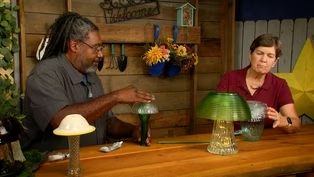
>>Well, today, I just thought I would do a free-purpose project.
Everybody have ample amount of glass, and have dishes that Aunt Sue gave you, and you don't know quite what to do with and you don't want to use it, but sentimental value, you wanna keep it, or you find pieces that you really like.
Going with a mushroom theme, we can make glass mushrooms that you can use in your home or your garden.
>>Love it.
I love it.
>>A very, very simple project to do that's feasible for people.
When you mention art projects, most people get a little scared 'cause they say they can't do this, but this is very easy and feasible for people and you can even bring your kids into it.
So all you need is something like a vase.
So if you have vases laying around, in floral industry, vases are disposable.
So there's lots of vases that end up in the landfill.
So why not reuse them if you can?
You can use bowls or different glass plates, recycled bottles.
So if you have bottles, you can even use those.
And then, all you need is something like epoxy or a adhesive, I prefer to use clear adhesive.
And if you're gonna use this for outdoors, make sure it is for outdoor use.
>>Yes, I had experience with that.
>>Yeah, you've got to make sure it is for outdoor use.
But basic project is you just go through, for starters, make sure that the glass is clean.
So use a glass cleaner, make sure the glass is clean 'cause you don't want any of the dust or residue still on there just because the glue will just stick to that as opposed to the glass.
>>Okay.
>>So you wanna make sure that that is clean.
Have your vase, and then if you have a bowl, basic shape, mushrooms, normally see them either just a upright bottom or flared bottom and a domed-type top.
>>There you go.
>>Mushroom grows in many different forms and different shapes, but if you're looking at it, you basically see a dome top with a base, so that automatically reads mushroom.
>>Perfect.
>>So I'm gonna set this one aside because I am going to work on this just because I wanna get a little more complicated.
>>Right, and we all know that vase.
>>Yes, again, floral industry, go to hospital stays, anything, you're gonna see this type of vase a lot.
And what I'm going to do here is I'm actually gonna invert this one.
Make sure that you can see the top, 'cause sometimes the bottoms of vases have a little indention, and you want the adhesive to stick to most of this surface.
>>Yes.
>>So set this aside.
And all we have to do is- >>I'm gonna do mine while you do yours.
>>Yep.
>>Okay?
>>So just follow along the edge.
>>Oh, do we wanna put a generous amount?
>>You wanna put a generous amount.
>>Okay.
>>Wanna follow just along the edge of this.
>>My experience with this is if it comes apart, you have to clean the old glue off to put new glue on.
>>Yes, again, just because the adhesive is going to stick to whatever it touches first.
>>Right, and it fell apart after like 10 years, so it wasn't a short... Okay, I've got my glue on.
>>Got the glue on?
>>Mm-hmm.
>>And then, close this top.
Then basically, again, just sticking it on, making sure that it has good contact.
>>Yep, okay.
Even wiggled a little.
>>Yep.
>>Okay.
>>Get this wiggled in.
>>Voila!
And it's centered.
Yeah.
>>And, again, it's just a easy, basic project.
If you do use something like this where it's inverted and you got a hollow bottom and you wanna use it in your garden, simply use a garden stake that you can cut, piece of bamboo or branch, or anything that you can put in the ground, and then you can just simply put it in, and then that way it will help hold it in place.
>>Genius.
Absolutely genius.
>>If you've got a solid bottom, then just make sure you got it on a level surface.
>>Mm-hmm.
>>You can set it out.
Then, depending on how you make it, like this one, right here, has an open top, so you're able to just take the top off and feed lights through.
>>Yes, you glued a metal top to that so that it became a cap almost.
>>Exactly.
>>So that you could access it, yes.
>>So you can just pull that off and put lights inside of it.
Or this one, right here, that has a light tube built inside.
And the way this one is made is it's all glued onto a piece of slate and I used to decorate moss around this to give it a more natural feeling.
And I found this container here, so I was able to put a plant in it.
>>Fantastic!
>>So you got a nice, little centerpiece for your table that you can use.
You got a little accent light.
And, like I said, it just comes right off and it has a light built inside.
>>Fantastic, Serome!
I think this is a great idea, and I think it's a way of repurposing, reusing, which we're all about.
>>Yes.
>>And having some fun in the garden as well.
>>Exactly.
>>So thank you.
Thank you for sharing this.
>>You're welcome.
Thank you.
>>Mm-hmm.
And now we're going back to Goldvein and sit down with Francis to answer questions that you've sent in.
>>Hey, Francis, I've got a few questions from viewers, if you don't mind taking the time to answer.
>>Oh yeah, anytime.
>>So for starters, "Do I harvest all of the mushrooms or just leave some for future growth?"
>>No, you harvest every mushroom that pins out and grows, you harvest it.
Number one, within a couple of days, if you don't harvest it, it rots.
So it's a disappointment to you because that is your collective.
So every time you have the season, the best thing for me to do is go through all the woods and harvest all the mushrooms and make sure I have some place for them.
>>Excellent, so you just harvest everything.
>>You harvest it because it's not coming back.
>>Then, "With the weather changing and everything, is there special instructions for over-wintering the logs?"
>>No special instructions.
If you grow them outdoors, you keep them outdoors.
The only thing is you don't put them where there's runoffs so that they get wet and they rot, you don't put them directly with the sunlight because the sunlight will put stress on the wood and it will die quicker.
>>Yeah, so you don't want the wood to die out.
>>So it age quicker actually.
It age quicker.
It's already dead, it will age quicker.
And then you'll have less and less of a product.
>>So, "How many years do you think, on the average, can the logs be used?"
>>Well, based on the shii, which is the oak, the oak is the longest lasting one, but they all vary between pin oak, chestnut oak, red oak, white oak, you know, English oak, all of that.
So your best and the highest one, I guess the highest one in the tent is the white oak because of the way the layering of the bark is, which means it grows, it takes a longer time to be able to age and crack for a path for the mushrooms to come out.
But then it retains its cambium layer which is where everything is in and out and in and out for years and years and years repetitively for it to then be the vull and noid, I mean null and void as nothing and then it's empty.
>>So it just depends on the type of wood.
>>Yes.
The type of wood, white oak is the best and then everything else falls in that category, it goes down.
>>Well, "You get products like broccoli where you have one big production or produce and, you know, then you have things like leaf lettuce- >>Right.
>>where you can cut and it will regrow.
So what category would the mushroom logs fall into?"
>>Well, we're talking about a substrate that is predetermined by the way you cut it, the size of it and everything else.
All of this nutrient acquisition and all these medicinal properties and everything else, it's in that log in the cambium layer.
So it's as long as the cambium layer is available.
>>Then it would just keep producing?
>>It just keeps producing when the weather's good or you remind it when the weather is good.
But when you look at something like a broccoli, one seed in, one seed out.
When you pull that broccoli, that is everything that's contained in that one seed or whatever, and that's the end of it.
Now it may produce seeds and then you have a continuum.
>>For the future.
>>Yeah, you keep pushing to different areas, retilling and that.
This one is already set until the log is dead and gone and all you have is the core of the wood.
That's it.
Yes.
>>That's very interesting.
That's really cool.
And then Renee has asked, "Is there a better season to start mushrooms?"
>>Well, again, it's the strain that you want.
Okay?
But yes, overall, the general message is that if you're gonna harvest wood, harvest the wood when the leaves are down and all the nutrients are in the wood.
Okay, that gives you the maximum of utilizing all of that, right?
And then, so that's gonna be like fall to winter 'cause the logs that you cut have a longer life before the actual aging of the wood.
So it may take you two months to use the fresh log because it'll still be fresh.
But in the summertime when all the elements are on there, there's a lot of rain, there's a lot of heat and all of that.
And then the leaves are on the tree so that there's an equal distribution of the nutrient that can go into the wood for it to produce the mushrooms.
So you're working with a less factor, lesser factor as far as nutrient.
What do you call it?
The weight of the wood equaling to the nutrient that it has in there versus the time to live of the wood itself, which is the adverse conditions will kill the wood quicker.
The cooler the temperature you go in there because again, we're dealing with that transport layer.
It's still active until it's dead, but it dies quicker in adverse and very, very hot temperatures.
>>Thank you again so much for answering these questions and having us out here.
>>No, thank you for all the questions.
These are the questions that are fundamental to the whole process and then engaging.
And the only thing I have to say is that when people put their passion into it, they gotta follow through or else it doesn't work.
Nine out of 10 people say, "I tried it.
It didn't work."
I don't tell them, "Oh, you're a bad guy.
You don't know what you're doing."
What I say is, "Yeah, you got to try and try and try again."
You know what I mean?
>>Mm-hm, sometimes you gotta try more than once.
>>That's a soft way of saying, go do it, it's an experiment.
Because something may be blocking it.
The wood may not have been right.
You know what I mean?
The spawn may not be right, that's why I say go to a trusted source.
If you get the spores, that means you want to go backwards about another 60 days, which means you need to produce the spawn.
>>Right.
>>But if you get the spawn, you just want to inoculate.
In all kinds of mushrooms, once you get the spawn you're ready to produce.
>>Thank you again.
>>All right.
(bright music) >>We had a huge pile of freshly cut wood chips delivered.
I put it down on our walkways earlier in the season, and what I saw was a beautiful lush carpet of green growing, and I realized that the mycelium, the fungus that is growing within these wood chips are really feeding that soil.
So I decided to mix that in with some of the depleted sandy soil and allow it to be more beneficial actually in my raised beds and my rows to feed my soil and to make a healthier soil structure.
As I reach over into this pile, I'm going to pull out and here, hopefully I can show you, inside of my hand.
You see all these white sections here?
That's mycelium.
That's a fungal network that is starting to grow and that tells me that it's starting to break down this wood, it's going to multiply.
And when it breaks that down, it releases the nutrients that's in this wood, that's in these leaves and it feeds my microorganisms, it feeds the roots, and it provides my plants with the nutrients that they need.
So let's get started.
So first thing I'm gonna do is take a pile, nice chunk right here of this, a couple of it, loads of it here and I'm going to sift it here.
And what's happening is my smaller pieces of wood chips and leaves are falling down towards the bottom and my larger pieces are going to stay up near the top.
So I can use those larger pieces on my walkways and stuff like that.
And here's some of my depleted soil that I have.
Now this soil, as I try to squeeze it, it doesn't hold.
It's just too sandy.
It's good soil, but I need it to hold moisture and those wood chips, that's one of the things that they're going to do.
So I'm going to do this, dump some of that in there, that's gonna filter out some of these roots and stuff that I have here.
And as I do this, a lot of the undesirable things that I don't really want in my soil will rise up to the top.
I'm gonna put that right there.
I'm gonna move this quickly for us.
Now, I didn't put a lot of soil in there.
It's still pretty much some soil mixed in with the wood chips.
What I'm going to end up doing is making sure this stays wet because I want the fungus to go ahead and have a breeding ground.
So when I put this onto my raised beds, also in my rows, that will feed and make my soil healthier.
So I'm going to have this great product and then I'll know that it's going to feed my plants as it starts to break down.
So this is a super simple method to enrich your soil.
Consider trying it.
Happy gardening.
>>Those threads of fungal mycelium create an extensive underground network that connect the roots of plants and act as a conduit for sharing water, nutrients, and even chemical signals about pests.
Next, we will take a look at my visit to North Side Growers in Louisa to meet Michelle Lofton and Dusty Swanlund to discover how mushrooms can be grown indoors.
So let's get going.
Dusty and Michelle, I'm kind of out of my element.
Usually I'm outside talking to people, but here I am in a beautiful grow chamber that's just perfectly controlled.
So how did this all come about?
>>Well, we've done everything from growing flowers and produce and plant starts and we've settled on mushrooms because it just, it resonated with us and we like growing them.
They're fun to grow, they're rewarding, and people love to eat them.
>>I'm amazed at the variety.
So what do you have growing in here?
>>So today we have lion's mane mushroom, blue oyster, king trumpet, and shiitake mushrooms.
>>That's fantastic.
They must be challenging though.
I mean, for all of this equipment and all of this attention to the environment.
>>They are challenging to grow.
Basically, we're trying to recreate an outdoor climate that's perfect for growing mushrooms.
And you run into a lot of problems, issues with trying to keep fresh air coming through and trying to keep the humidity correct.
And basically from the very beginning you start with the spawn, and that is a very sterile process to begin with.
>>With that spawn and with that climate, and getting the spawn ready, I'm sure, is quite challenging.
But Dusty, getting the climate set is probably even more so how do you get that all prepared?
>>Well, getting a nicely insulated room was the first step and that really, because they like the same temperature we do, the 65 to 75 degrees, that was the biggest hurdle here in Central Virginia.
>>At what humidity do you have to keep this room at?
>>We like to shoot for anywhere between 70 and 90% humidity.
They need humidity to grow, but also need a little drying period for them to grow properly.
>>And then the spawn comes in.
So what do we start with actually?
>>So we start with supplemented sawdust bags that we put together ourselves.
Then we take grain spawn, which we are just starting to make ourselves.
>>We had been buying it but those distributors have not been as reliable as we wanted.
>>We've found that we get a lot of contaminated grain spawn from other companies,- >>Oh my.
>>which is really difficult.
And so it forced us into making our own grain spawn, and that of itself is fairly difficult.
(laughs) >>Well, what's the process?
I mean, the substrate and the spawn.
>>So.
>>The spawn would take soaking grains, boiling them, and then pressure cooking them, and then inoculating them with a liquid culture which is basically mushroom that's floating around in like a syrup.
And then you squirt that on the grains and then wait up to a month before they're colonized, and then you have to add that to your prepared substrate and then wait some more.
And then eventually you cut an "X" on the side and they pop out some mushrooms within seven to 10 days usually.
And if you did it wrong, they won't.
>>(laughs) Well, what's in the substrate?
You had said it was sawdust and some other components.
>>So you can use alfalfa, beet pulp, soybean hulls, and wood pellets.
>>Hardwood fuel pellets.
>>Mm-hm.
>>And you just mix it and compress it?
>>Yeah, you mix it together and when you inoculate the bags, you have to make sure all the grain spawn is distributed throughout.
So there's a lot of handling that's going on.
You're touching these bags.
>>Up to 14 times.
>>Up to 14 times.
>>Wow.
>>Yeah, when it comes... >>Before you throw it out, so.
>>Yeah, it's pretty labor intensive.
And so the bags that we fruit, it takes about, after they are inoculated, it takes about a month before they start to fruit.
>>Okay.
>>So after we cut the bags, about two weeks.
>>Oh, fun.
Do you change the environment in this room after you cut the bags or before you cut the bags or?
>>No, it stays pretty steady all the time.
We try to keep it nice and steady.
And the humidifier, we have to make sure stays sterile.
It's got a UV light in it because it can grow bacteria and so therein lies another issue you have to worry about.
Dusty's taken care to make a really efficient system for that.
>>Yeah, we clean it weekly, we keep, like she said, a UV light in there to keep anything from growing.
If your humidity is not clean, you can lose whole crops, which we have in the past.
>>To a bacterial infection called blotch.
It can really mess things up.
And the most common thing you have to worry about is Trichoderma, which is a green fungus and it spreads like wildfire if it goes unnoticed.
>>That's interesting 'cause people, when they think of mushrooms, they think of fungi, but when they think of fungi, they don't realize that bacteria and mold are different.
>>Right.
>>And there's problems for actually what you're trying to do.
>>They both affect the process, like throughout the entire process from where you start and to harvest, anything can go wrong.
Some of the common funguses that you have to worry about is orange-red mold, like I said, Trichoderma, cobweb fungus, and they all look different and they're really hard to detect sometimes and then others are really obvious.
But it means that you're always watching your grain spawn, monitoring every part of the process and if you don't, that's when something usually goes wrong.
>>Just like in a garden.
>>Yep, yes.
Yes.
Yeah.
We got into this because we thought it would be easy.
>>Uh-huh.
(laughs) >>We were wrong.
>>But you've learned so much and you've got a beautiful product.
I mean, look at this lion's mane.
It's so pretty.
It's really fun to see just the different shapes and the different growing patterns of these different mushrooms.
How long did it take to get to this point and how much longer to be able to harvest?
>>So to that point right there on that lion's mane, it's probably three weeks of colonization in the bag and then about two weeks of growth, 10 to 14 days for them to be ready to harvest.
>>And how much more is this gonna grow for you to harvest?
How big will it be?
>>These will probably get, at least they will probably double in size before we grow.
But most of the time you go by the length of the spines on the mushroom.
And so when they get to be just a little bit longer, about a fourth of an inch, that's when they're ready to go.
You want to get them while they're still nice and white.
If there's any browning, that means they're starting to dry out and get 'em off the bag.
>>Once you come in and harvest, what's the next steps?
What's the process?
>>So we harvest them straight into boxes that go right into our walk-in cooler, and we usually try to time our harvesting so that they are at their freshest.
We bring the freshest mushrooms to market.
>>She's usually harvesting Saturday morning before market.
>>Yeah, before market.
>>People love it when they're like, "Yeah, these were harvested two hours ago."
And they're like, "Wow."
>>That's wonderful.
>>So I'll be up at five in the morning harvesting and just boxing these things up for wherever they need to go.
>>And then when they hit my house, typically, how long do I have to use them?
>>They actually stay fairly long while, but for the most part, we say 10 days.
And if they dry out in your fridge, that's okay.
If they're slimy at all, if there's any smell, pitch them.
>>Yeah, time for the compost pile.
>>Correct.
>>And what we have found is they do freeze really well.
So you can take whole caps of oyster mushrooms and freeze them for short periods of time and just throw them right in a pan and they cook up.
They thaw out really, really well.
>>I'll have to keep that tip in mind.
Thank you.
(laughs) >>Absolutely.
Absolutely, save yourself.
>>I think as a person who's, I'll say growing inside is foreign to me, except for my house plants.
This is just so fun.
Hard, lots of learning curves, but look at the outcomes.
>>Lots of learning curves.
>>Yes.
>>Yes.
>>I was impressed in how an old greenhouse was repurposed to create a clean room for growing mushrooms.
It's just like how mushrooms repurpose wood to grow on and to thrive as well.
And, Serome, I have something semi-related to all of this because of the shade factor, okay?
It's moister, it's cooler.
And with our weather here, it's perfect >>Oh yeah.
>>for growing mushrooms, but also for growing moss.
>>And they go hand in hand.
>>They do go hand in hand.
And so many people, they get so frustrated because they can't grow grass underneath their shade, their shade trees, and in the part shade.
And my attitude is let it go.
>>Exactly.
Sometimes it's better to not fight with mother nature.
>>Exactly.
And if you have moss, just encourage it.
And if you're not, then bring it on in.
But here's some of our common mosses that I've found close by to home here.
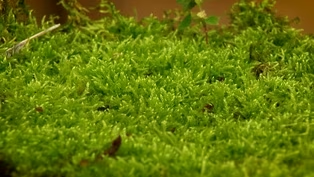
And one of them is here this hairycap moss, and it actually grows to a number of inches tall.
>>Yeah, it looks like little pine trees.
>>It does, isn't it?
>>Own little forest.
>>It does.
And you know, mosses are very simple plants.
They don't have a vascular system.
So, this one here has this very rudimentary system for moving water all the way up >>Mm-hmm.
>>that super tall stem there.
>>Right.
Yeah.
(Peggy laughing) >>But then we have a creeper called a fern moss, and this fern moss loves the moisture and just creeps along in the shade to part shade.
>>Mm-hmm.
>>And what makes it adhere to places are its rhizoids, which are thread-like structures.
>>Yes.
So, it's not like a root system.
It's just basically to hold it down.
>>Truly, because again, mosses get all of their nutrients, their moisture from the air.
And guess what else they do?
They clean the air and they sequester carbon for us.
>>See, a win-win.
>>Win, win, win.
Unlike a lawn, which uses so many inputs, the fertilizer, the pesticides, the water, the seeding, on and on.
>>Yeah.
And if you want to grow moss too, you got to remember, you don't want to use any of that stuff along with the moss.
They just do not like it.
>>Gosh, no.
No.
But we have another moss that does not like any sunshine at all.
It's called a spoon moss and these little leaves are wrapped around its stem, like little spoons lined up.
And that's a fun one.
Again, a slow spreader.
But then we have one >>Mm-hmm.
>>that people are familiar with, a mounder, called a cushion moss.
>>Cushion moss.
>>Yes.
>>So, you just see little mounds >>Yup.
>>just growing on the side of trees and on hillsides.
>>Exactly.
And it gets to be a nice dome and it can come in a dark green, a light green, or even a silver green.
So, they're all those cushion mosses.
>>And imagine all of them put together and you can make a tapestry.
>>Yes, you can, you can.
Be beautiful.
And then, finally, there's the feather moss here, which is, I took that from my house personally, because it's growing all over my brick walkway.
(Serome chuckles) And- >>Yes.
So, this one, I know loves growing on hardscapes.
I've remembered days >>Mm-hmm.
>>of having to scrape them off of stairwells and everything.
So, they do like hard surfaces.
>>They do.
And again, we have rhizoids which are connecting them, >>Mm-hmm.
>>those thread-like structures because they don't have roots.
So, it's perfect for that kind of environment to grow on (laughs) >>Mm-hmm.
>>as much as we want it.
But it also shares that you need to, for care of the moss, you do need to weed it, okay?
And I know both of us want to pull these weeds to make it nice and clean, (Serome laughing) but we're gonna resist.
(chuckles) But you do need to weed your moss and you don't want to rake your moss because that'll just rake it all up.
>>Yeah, it's a lot easier on them to have a blower.
>>Mm-hmm.
>>There is specialized, if you have a huge moss lawn, there are specialized blowers that are on wheels so that it's close to the ground and will blow things away instead of blowing directly at it.
So, it limits the damage that could happen if you're blowing air directly on it and you start >>Truly.
>>filling up the moss.
>>But if you don't, just put your blower on low.
>>Yep, exactly.
>>Okay?
Take it easy and be kind.
Now, people who want to extend their moss or even start a moss garden, there's an old wives' tale of buttermilk and water (Serome chuckles) and a moss in a blender.
And I'll be honest, I tried that decades ago and it just doesn't work.
>>It doesn't work.
>>Okay?
But what you can do is buy your moss from a reputable dealer.
Please don't go out >>Yes.
>>and harvest in the woods.
>>And go harvest.
>>Yeah, these are all from a friend's house.
But what you want to do is clear the area.
Don't till the soil.
Leave it hard because they like hard surfaces, >>Mm-hmm.
>>rocks, logs, bare soil.
And then, put moisture down, lay your moss sheets down.
And then, I would suggest putting a netting over it to keep the wildlife.
>>Yes.
Birds would love going through and start grabbing it, >>Mm-hmm.
Squirrels.
>>nesting >>Mm-hmm.
>>and everything else.
>>Right.
But then just like any other plant, you need to water it regularly for a few weeks >>Mm-hmm.
>>until it takes.
And don't be dismayed if it turns brown because many of these kind of go dormant.
>>Give it a little water >>And once- >>and guess what?
>>Greens back up.
>>It revives itself.
And- >>Yup.
>>And I use moss for a lot of projects too.
So, I've even built moss propagation bins where you just have a bin and I would drill holes in the bottom for the drainage and put down like a gravel layer or chicken grit layer >>Mm-hmm.
>>just to put the moss on and I can set it aside in the shade and just let the moss spread.
And then, I have moss there for projects that I'm using it for.
>>That is awesome.
See, it's good for projects.
It makes a beautiful green carpet for a shady or part shade area.
And I just think it's undervalued and- >>Yeah, it's just beautiful.
>>It is beautiful.
And it makes it... Think of all those gardens worldwide >>Oh yes.
>>that are covered in moss.
So.
And now, we're going back to Michelle to answer the questions that you've sent in.
Remember, you can submit questions anytime at vpm.org/vhg or on Facebook.
We always enjoy hearing from you.
So, Michelle, our very first question is, how long does it really take to grow a mushroom from start to finish?
>>From start to finish, >>Yeah.
>>after you inoculate the bag, it takes about a month for the bag to fruit.
>>That's all.
That's amazing.
>>Mm-hmm.
>>With a lot of work in between.
>>Oh, yes.
A lot of handling.
(Peggy laughing) >>Yes, you had said earlier that you touch a bag about 14 times during that process?
>>Mm-hmm.
Yes.
>>That's just amazing.
I had no idea they were so, I don't want to say labor, but so time-consuming.
>>We put a lot of love into it.
>>There you go.
That's good.
>>Yes.
(chuckles) >>Not so much sweat though.
It's nice in here.
>>It is very nice in here.
(Peggy laughing) We're grateful for that.
>>Yes.
And another question I have from Karen is, "What's the best way to keep mushrooms fresh?"
>>The best way to keep them fresh is as soon as you get them, make sure you put them in a paper bag and put them in your fridge, >>Paper bag?
>>on the top shelf.
Don't put them in the crisper.
>>Oh, wow.
Interesting.
>>Mm-hmm.
Yes.
>>Do you wash them first or you wash them before you use them?
>>So, the mushrooms you're going to be getting from us at market are going to be nice and clean because they're growing in a clean space without bugs.
So, if you do see any debris on it, just brush it off lightly with a paper towel >>Mm-hmm.
>>and you can cook it from there.
>>Interesting.
Well, we have another question that says, "What part of the mushroom should you eat?
The cap, the stem, the whole thing?"
>>My personal favorite is the cap of the mushroom.
It's the most tender.
It's got the best texture.
But with the stem, you can take that and you can pull it into strips, >>Uh-huh.
>>and that actually makes it a little more palatable.
It's got a bit of a chew.
You can eat both.
>>Mm-hmm.
>>It's all about your preference.
I will eat the whole mushroom.
>>Mm-hmm.
(Michelle laughing) >>I do too generally, but some people do >>Mm-hmm.
>>have their preference, like you had just shared.
>>Just give it a try.
>>From one type of mushroom to another, does it vary?
I mean, lion's mane to a blue oyster?
>>Oh my gosh, absolutely.
>>Yeah.
>>So, lion's mane has a very meaty texture.
It's kind of a very moist mushroom, so you have to cook the moisture out of it, whereas an oyster mushroom is gonna be nice and meaty and very sturdy in its texture, >>Uh-huh.
>>but it can get lost in the sauce sometimes, depending on the variety of oyster mushroom, because there's at least five different varieties of oyster mushrooms you can grow.
>>Mm-hmm.
>>And then, you have shiitake, which is the classic really meaty, buttery flavor to it.
Is there any one that I'm missing?
>>Yes.
(laughs) I'm not sure.
(Michelle laughing) I think you've covered them all, >>Oh yeah.
>>the different types.
>>Yeah.
>>But speaking of shiitakes, did you start growing those outside in a log like most people try to do, or did you just jump into this wonderful controlled environment?
>>So, we did start out on shiitake logs >>Mm-hmm.
>>and we loved the process so much and it took so long to get those logs to fruit.
But once they did, we're like, how can we do this >>Yeah.
>>on a larger scale?
We're like, we have so little land to work on.
We're like, we got to build a facility.
>>Uh-huh.
>>And my husband turned this greenhouse, this was a greenhouse, (Peggy laughing) and he turned it into our grow room, and I'm so grateful he did.
>>And it's still growing.
>>Mm-hmm.
(Peggy laughing) Yes, it is.
>>That's so fun.
That's a great story.
I love it.
And it's such a, I'll say, even when it's 110, you can come in here and enjoy working with the mushrooms.
>>Oh, it's quite the relief.
Yes.
>>Yes.
(both laughing) "What type of soil mix are you using?"
Linda would like to know.
>>So, are you talking about- >>Not soil, but substrate.
Yeah.
>>Oh, substrate.
So, you can use a lot of different substrates.
We use soybean hulls and then wood pellets, >>Mm-hmm.
>>hardwood pellets.
But you can use beet pulp, you can use alfalfa pellets.
Some people grow on coffee and you can even inoculate an old pair of cotton jeans >>Oh, that's wild.
>>and grow off those.
And some people have grown off of toilet paper rolls, which I don't >>Oh.
(chuckles) I mean.
>>quite understand.
>>Yeah, I don't understand either.
>>You can use a lot.
And it all depends on the variety of mushroom you're growing, but they can grow on pretty much anything.
>>Well, Michelle, people don't realize there is a difference between fungus and mold and bacteria.
So, share with us, please.
>>So, bacteria is a form of contamination when it comes to mushroom growing, and so is mold.
>>Mm-hmm.
>>And you can find both of them growing in a bag that hasn't been properly sterilized, >>Ah.
>>which is unfortunate.
And there are a bunch of different types of molds that you can get on a bag such as orange bread mold and trichoderma, and cobweb mold, and they all will affect the growth of your bag.
>>Oh, that's frustrating.
>>Mm-hmm.
>>And you just have to dispose of the bag?
>>Unfortunately, a lot of the time, you do.
And through our learning experiences, unfortunately, we have thrown away many batches of mushrooms.
They were all learning experiences, but they were somewhat costly, >>Mm.
>>unfortunately.
>>Oh.
So sorry to hear that.
How often can you reuse that bag?
That's a question from me.
How often?
Yeah.
>>So- >>Meaning that substrate, can, once you harvest it once, can you get some additional harvests off of it, or?
>>So, generally in our case, we will fruit off the bag twice.
We will harvest twice off the bag and then we have to get rid of them.
And so, those fruiting bags, they're not dead yet.
They have a lot of life left in them.
And so, we actually post online that, hey, you can come pick up all these spent grow bags, and people will use them to make fertilizer for their garden.
>>Oh, wow.
>>And what they'll find is if it sits in their yard long enough, they will fruit with the weather.
(Peggy laughing) And they're like, "Oh my god, we had all these amazing mushrooms last week from your bags."
(Peggy laughing) I'm like, you started your own mushroom farm.
Enjoy.
>>That is so cool.
>>It is pretty cool.
>>And there's a lot of mushroom growers who are looking for sources to share their bags with, so that put them in the compost, you can put them into your garden.
They're great.
>>Oh, absolutely.
And we have people come and pick up a whole truckload, and we need someone to come do that now because the mountain's getting a little high outside.
>>I'll take a few (Michelle laughing) off your hand.
>>You should.
(laughs) >>Yeah.
Well, Michelle, thank you so much.
These are the questions from our viewers, and I appreciate you taking the time to answer them.
>>It's my pleasure.
(rhythmic music) >>When commercial mushroom growers are ready to plant mushrooms, they need to create a substrate.
And typically, those substrates are only used for one round of mushroom growth.
And then, what you're left with is a really rich organic material that can then be reused and resold as mushroom compost.
It might be locally produced or it could come from a little further away, much bigger operation.
Those operations actually steam sterilize the compost before you get it.
That gets rid of any pathogens and any active weed seeds.
And the mushroom compost looks just like a very nice rich soil.
You can get this in bags, or sometimes you can get it at much larger quantity, like a scoop for your pickup truck at some garden centers.
And depending on how much you need, the trick is there's some mushroom compost do have a lot of soluble salts.
And if there's too much salt in the soil, that will be detrimental to your plants.
So, what I've done when I've used mushroom compost is to mix it in thoroughly with the soil I already have.
So, I am not going to have a high amount of the mushroom compared to the soil.
I'm gonna have at least a one-to-one kind of mixture.
So, here, I just want to transplant some of my native plants.
The soil that I have right here is incredibly poor.
It has almost no organic material.
It's pretty dense clay.
And so, I just want to try to break up that soil a little bit with the mushroom compost.
And then, what I'm gonna do is just kind of check to see if I'm at the right level.
I need a little bit more.
That's not quite tall enough.
So, I'll just kind of keep mixing (soil clatters) and just trying to make sure that I'm giving the plant a nice substrate to grow in.
(soil clatters) Extra organic material should help with the root growth and over time, withholding water, which in drought seasons is very important.
(leaves rustling) So, there we are at the right level, and now I'm just gonna dump in a bunch more of my soil with another handful or two of my mushroom compost, and I'm gonna finish up by filling this in fully.
I'm going to water really heavily because we are very dry right now.
And then, I have some arborist chips that I'm gonna totally mulch this with to make sure the plant is happy, and hopefully then we'll get some rain to water it in.
So, mushroom compost is a great addition for your soil to add organic material.
Just be very cautious if you're concerned about the soluble salts.
You can always do a soil test if you're getting it in by the scoop load and check to see how it looks.
Happy gardening.
>>Even after the mushrooms are harvested, the substrate continues to enrich the soil fungi as mushroom compost.
It's just a continuous circle that never ends.
Whether grown indoors or out, mushrooms not only add flavor, color, and textures to many dishes, they also provide a variety of health benefits.
And I caution everyone to only eat mushrooms from a safe source because many can be toxic.
So, Serome, we've just got a few minutes and I'd like to hear what's going on in your garden.
>>Well, I'm really glad that this weather is starting to cool off a little bit.
>>Yes.
>>So, I'm thinking to do some fall planting, so I'm revamping some of the beds and now it's time to put in my kale and all of that.
>>Excellent.
>>So.
>>Are you seeing any spotted lanternfly because they're coming into town?
>>Even the Richmond area, I'm starting to see a few different places.
Even in my own home, I've spotted some.
So, they're starting to spread their wings a little bit more.
>>Yes, literally.
(laughs) >>Exactly.
>>People have, they take that name fly and it's not a fly at all.
It's actually a true bug and it's more related to aphids and cicadas.
>>Yeah, because they have that sucking mechanism and they're just sucking their life out of our plants.
>>And the plants that they prefer are our deciduous trees, which includes our apples >>Mm-hmm.
>>and other fruit trees, and also our grapes.
>>Yeah.
And everybody's got to realize because one of their magnets is the tree of heaven.
So, if you have it >>Yeah.
>>on your property, let's start thinking about eradicating it and at least start there >>Yeah.
>>because they're here now and so we want to eliminate the numbers and try to make a sustainable area for everything.
>>Exactly.
They're not gonna go away.
They're in 20 states now.
>>Mm-hmm.
>>They've been here for 12 years.
It's a situation where we need to control and focus on what's important to us by making sure we scrape that egg mass off, which really does look >>Mm-hmm.
>>like putties smeared on a surface.
>>Yeah, hard surfaces.
So, this winter, it's time to get out and start checking your properties and see if you notice any, and can start there to get rid of things for the next season.
>>Yeah, it's a great use for an old credit card, to be honest with you.
(Serome laughing) But it's the flat surfaces, which includes our boats, >>Mm-hmm.
>>our trailers, our cars, trees.
>>Chairs.
>>Yep.
Chairs, our outdoor furniture, >>Mm-hmm.
>>even our houses to some degree.
We've got to really watch it.
>>Yeah.
So, I would say just get out, start looking for sites that will show you what you're looking for.
>>Truly.
Mm-hmm.
>>And do some research and then start from there.
>>Truly, because this is a time of year here in the fall >>Mm-hmm.
>>when it's the adults are laying the eggs, the whole cycle, fortunately, their life cycle is just one year.
It's not multiple generations in one year, >>Mm-hmm.
>>but it does start in the spring with cute little black >>Yes.
>>and white dotted little tiny insects that hop.
>>Mm-hmm.
>>These are not flies.
They hop.
Yup.
>>Hop.
Yes.
And they're really fast.
>>They are very fast.
(Serome laughing) And the other thing is to be aware of is when they, I'll say a lantern fly poo is basically the honeydew >>Mm-hmm.
>>dripping from trees with heavy infestations, so.
And these insects don't bite.
They don't harm humans.
They just suck the sap out of the tree.
>>Yes.
>>And- >>And unfortunately, they shouldn't be here and they are beautiful, but we don't need them here.
>>No, we don't, but we've just got to get used to them.
>>Mm-hmm.
>>Kind of like those stupid Japanese beetles.
>>Beetles.
(both laughing) Yes.
Nemesis to a lot of people.
>>Absolutely.
(both laughing) Well, Serome, we're out of time, and I really appreciate you being here today.
>>Thank you for having me.
>>Yes.
And thanks to all of our guests today, and thank you for watching.
And remember that you can stay connected with me and the team by signing up for the monthly newsletter on our website, vpm.org/vhg.
Next month, we're featuring pumpkins and other fall crops, which some might surprise you.
So, send us your questions on that topic and other general gardening items using our website or through Facebook.
And while you're on Facebook, check out a new baking and bloom tip from Chris Martin.
I look forward to being with you again soon.
And until then, remember, gardening is for everyone, and we're all growing and learning together.
Happy gardening.
>>Production funding for "Virginia Home Grown" is made possible by... Strange's Florist, Greenhouses, and Garden Centers, serving Richmond for over 90 years.
With two florist shops, two greenhouses, and a garden center located throughout the Metro Richmond area.
Strange's, every blooming time.
And by Sally R. Youngs in honor of the Grateful Deadheaders Resident Interest Group.
And by... (birds chirping) (bright and relaxing music) (bright and relaxing music continues) (bright and relaxing music continues) (bright and relaxing music continues) (bright and relaxing music continues) (bright and relaxing music fading) (corporate jingle)
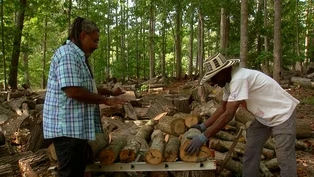
Growing Shiitake Mushrooms on Logs
Video has Closed Captions
Clip: S26 Ep7 | 7m 42s | Discover techniques for cultivating mushrooms in a natural environment (7m 42s)
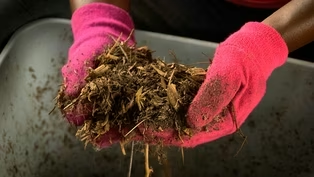
How to Amend Soil with Wood Chips
Video has Closed Captions
Clip: S26 Ep7 | 3m 19s | Learn tips for improving your garden soil with wood chips (3m 19s)
Video has Closed Captions
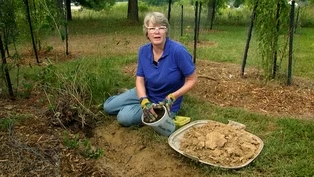
Clip: S26 Ep7 | 3m 23s | Give your garden beds a boost with mushroom compost (3m 23s)
Video has Closed Captions
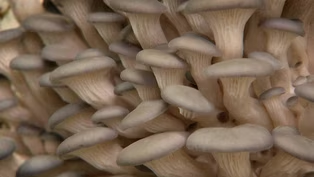
Clip: S26 Ep7 | 7m 55s | Meet mushroom farmers growing a variety of gourmet shrooms indoors (7m 55s)
Video has Closed Captions
Clip: S26 Ep7 | 5m 44s | Learn how to create unique mushroom inspired sculptures for your garden (5m 44s)
Video has Closed Captions
Clip: S26 Ep7 | 5m 17s | Discover native moss varieties and tips for their care (5m 17s)
Providing Support for PBS.org
Learn Moreabout PBS online sponsorship














Support for PBS provided by:
Virginia Home Grown is a local public television program presented by VPM