Virginia Home Grown
Indoor Mushroom Cultivation
Clip: Season 26 Episode 7 | 7m 55sVideo has Closed Captions
Meet mushroom farmers growing a variety of gourmet shrooms indoors
Peggy Singlemann meets Dustin Swanlund and Michelle Lofton at North Side Growers in Louisa to discover how several varieties of gourmet mushrooms are grown indoors in climate-controlled conditions. Featured on VHG episode 2607, September 2026.
Problems playing video? | Closed Captioning Feedback
Problems playing video? | Closed Captioning Feedback
Virginia Home Grown is a local public television program presented by VPM
Virginia Home Grown
Indoor Mushroom Cultivation
Clip: Season 26 Episode 7 | 7m 55sVideo has Closed Captions
Peggy Singlemann meets Dustin Swanlund and Michelle Lofton at North Side Growers in Louisa to discover how several varieties of gourmet mushrooms are grown indoors in climate-controlled conditions. Featured on VHG episode 2607, September 2026.
Problems playing video? | Closed Captioning Feedback
Where to Watch Virginia Home Grown
Virginia Home Grown is available to stream on pbs.org and the PBS app.
Providing Support for PBS.org
Learn Moreabout PBS online sponsorshipDusty and Michelle, I'm kind of out of my element.
Usually I'm outside talking to people, but here I am in a beautiful grow chamber that's just perfectly controlled.
So how did this all come about?
>>Well, we've done everything from growing flowers and produce and plant starts and we've settled on mushrooms because it just, it resonated with us and we like growing them.
They're fun to grow, they're rewarding, and people love to eat them.
>>I'm amazed at the variety.
So what do you have growing in here?
>>So today we have lion's mane mushroom, blue oyster, king trumpet, and shiitake mushrooms.
>>That's fantastic.
They must be challenging though.
I mean, for all of this equipment and all of this attention to the environment.
>>They are challenging to grow.
Basically, we're trying to recreate an outdoor climate that's perfect for growing mushrooms.
And you run into a lot of problems, issues with trying to keep fresh air coming through and trying to keep the humidity correct.
And basically from the very beginning you start with the spawn, and that is a very sterile process to begin with.
>>With that spawn and with that climate, and getting the spawn ready, I'm sure, is quite challenging.
But Dusty, getting the climate set is probably even more so how do you get that all prepared?
>>Well, getting a nicely insulated room was the first step and that really, because they like the same temperature we do, the 65 to 75 degrees, that was the biggest hurdle here in Central Virginia.
>>At what humidity do you have to keep this room at?
>>We like to shoot for anywhere between 70 and 90% humidity.
They need humidity to grow, but also need a little drying period for them to grow properly.
>>And then the spawn comes in.
So what do we start with actually?
>>So we start with supplemented sawdust bags that we put together ourselves.
Then we take grain spawn, which we are just starting to make ourselves.
>>We had been buying it but those distributors have not been as reliable as we wanted.
>>We've found that we get a lot of contaminated grain spawn from other companies,- >>Oh my.
>>which is really difficult.
And so it forced us into making our own grain spawn, and that of itself is fairly difficult.
(laughs) >>Well, what's the process?
I mean, the substrate and the spawn.
>>So.
>>The spawn would take soaking grains, boiling them, and then pressure cooking them, and then inoculating them with a liquid culture which is basically mushroom that's floating around in like a syrup.
And then you squirt that on the grains and then wait up to a month before they're colonized, and then you have to add that to your prepared substrate and then wait some more.
And then eventually you cut an "X" on the side and they pop out some mushrooms within seven to 10 days usually.
And if you did it wrong, they won't.
>>(laughs) Well, what's in the substrate?
You had said it was sawdust and some other components.
>>So you can use alfalfa, beet pulp, soybean hulls, and wood pellets.
>>Hardwood fuel pellets.
>>Mm-hm.
>>And you just mix it and compress it?
>>Yeah, you mix it together and when you inoculate the bags, you have to make sure all the grain spawn is distributed throughout.
So there's a lot of handling that's going on.
You're touching these bags.
>>Up to 14 times.
>>Up to 14 times.
>>Wow.
>>Yeah, when it comes... >>Before you throw it out, so.
>>Yeah, it's pretty labor intensive.
And so the bags that we fruit, it takes about, after they are inoculated, it takes about a month before they start to fruit.
>>Okay.
>>So after we cut the bags, about two weeks.
>>Oh, fun.
Do you change the environment in this room after you cut the bags or before you cut the bags or?
>>No, it stays pretty steady all the time.
We try to keep it nice and steady.
And the humidifier, we have to make sure stays sterile.
It's got a UV light in it because it can grow bacteria and so therein lies another issue you have to worry about.
Dusty's taken care to make a really efficient system for that.
>>Yeah, we clean it weekly, we keep, like she said, a UV light in there to keep anything from growing.
If your humidity is not clean, you can lose whole crops, which we have in the past.
>>To a bacterial infection called blotch.
It can really mess things up.
And the most common thing you have to worry about is Trichoderma, which is a green fungus and it spreads like wildfire if it goes unnoticed.
>>That's interesting 'cause people, when they think of mushrooms, they think of fungi, but when they think of fungi, they don't realize that bacteria and mold are different.
>>Right.
>>And there's problems for actually what you're trying to do.
>>They both affect the process, like throughout the entire process from where you start and to harvest, anything can go wrong.
Some of the common funguses that you have to worry about is orange-red mold, like I said, Trichoderma, cobweb fungus, and they all look different and they're really hard to detect sometimes and then others are really obvious.
But it means that you're always watching your grain spawn, monitoring every part of the process and if you don't, that's when something usually goes wrong.
>>Just like in a garden.
>>Yep, yes.
Yes.
Yeah.
We got into this because we thought it would be easy.
>>Uh-huh.
(laughs) >>We were wrong.
>>But you've learned so much and you've got a beautiful product.
I mean, look at this lion's mane.
It's so pretty.
It's really fun to see just the different shapes and the different growing patterns of these different mushrooms.
How long did it take to get to this point and how much longer to be able to harvest?
>>So to that point right there on that lion's mane, it's probably three weeks of colonization in the bag and then about two weeks of growth, 10 to 14 days for them to be ready to harvest.
>>And how much more is this gonna grow for you to harvest?
How big will it be?
>>These will probably get, at least they will probably double in size before we grow.
But most of the time you go by the length of the spines on the mushroom.
And so when they get to be just a little bit longer, about a fourth of an inch, that's when they're ready to go.
You want to get them while they're still nice and white.
If there's any browning, that means they're starting to dry out and get 'em off the bag.
>>Once you come in and harvest, what's the next steps?
What's the process?
>>So we harvest them straight into boxes that go right into our walk-in cooler, and we usually try to time our harvesting so that they are at their freshest.
We bring the freshest mushrooms to market.
>>She's usually harvesting Saturday morning before market.
>>Yeah, before market.
>>People love it when they're like, "Yeah, these were harvested two hours ago."
And they're like, "Wow."
>>That's wonderful.
>>So I'll be up at five in the morning harvesting and just boxing these things up for wherever they need to go.
>>And then when they hit my house, typically, how long do I have to use them?
>>They actually stay fairly long while, but for the most part, we say 10 days.
And if they dry out in your fridge, that's okay.
If they're slimy at all, if there's any smell, pitch them.
>>Yeah, time for the compost pile.
>>Correct.
>>And what we have found is they do freeze really well.
So you can take whole caps of oyster mushrooms and freeze them for short periods of time and just throw them right in a pan and they cook up.
They thaw out really, really well.
>>I'll have to keep that tip in mind.
Thank you.
(laughs) >>Absolutely.
Absolutely, save yourself.
>>I think as a person who's, I'll say growing inside is foreign to me, except for my house plants.
This is just so fun.
Hard, lots of learning curves, but look at the outcomes.
>>Lots of learning curves.
>>Yes.
>>Yes.
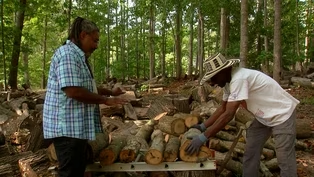
Growing Shiitake Mushrooms on Logs
Video has Closed Captions
Clip: S26 Ep7 | 7m 42s | Discover techniques for cultivating mushrooms in a natural environment (7m 42s)
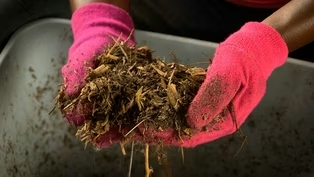
How to Amend Soil with Wood Chips
Video has Closed Captions
Clip: S26 Ep7 | 3m 19s | Learn tips for improving your garden soil with wood chips (3m 19s)
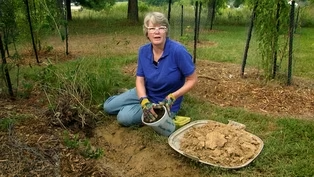
Video has Closed Captions
Clip: S26 Ep7 | 3m 23s | Give your garden beds a boost with mushroom compost (3m 23s)
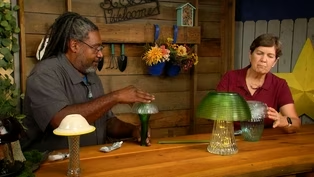
Video has Closed Captions
Clip: S26 Ep7 | 5m 44s | Learn how to create unique mushroom inspired sculptures for your garden (5m 44s)
Video has Closed Captions
Clip: S26 Ep7 | 5m 17s | Discover native moss varieties and tips for their care (5m 17s)
Providing Support for PBS.org
Learn Moreabout PBS online sponsorship















Support for PBS provided by:
Virginia Home Grown is a local public television program presented by VPM