Virginia Home Grown
Shaded Mini-Meadow
Clip: Season 26 Episode 3 | 7m 52sVideo has Closed Captions
Discover how small meadows make big impacts
Peggy Singlemann visits Becky Winstead at her garden in Virginia Beach to tour a shaded mini meadow and discuss how homeowners can support biodiversity in even a small space. Featured on VHG episode 2601, March 2026.
Problems playing video? | Closed Captioning Feedback
Problems playing video? | Closed Captioning Feedback
Virginia Home Grown is a local public television program presented by VPM
Virginia Home Grown
Shaded Mini-Meadow
Clip: Season 26 Episode 3 | 7m 52sVideo has Closed Captions
Peggy Singlemann visits Becky Winstead at her garden in Virginia Beach to tour a shaded mini meadow and discuss how homeowners can support biodiversity in even a small space. Featured on VHG episode 2601, March 2026.
Problems playing video? | Closed Captioning Feedback
Where to Watch Virginia Home Grown
Virginia Home Grown is available to stream on pbs.org and the PBS app.
Providing Support for PBS.org
Learn Moreabout PBS online sponsorship>>There are so many ecological benefits to a meadow.
I think everybody should have one.
Obviously, it creates biodiversity, not just in plant material, but in the creatures and wildlife that you see.
It supports birds and insects and pollinators.
It works to mitigate flooding.
It stores carbon.
The dense root system prevents erosion.
With sediment filtration, it improves water quality downstream.
The maintenance is so much lower.
You do not have to put any fertilizers.
You don't have to water it.
You don't have to add anything to your soil.
The meadow is designed to fit the site.
And you know, in our area, we basically live in a giant estuary, and we get a lotta rain.
So the flood mitigation and the water quality improvement is especially important to our community.
And it is beneficial for everyone, not just humans.
So meadows are just, I can't think of a negative.
>>The grass did not grow well here.
It's poor soil, or I think it's poor soil, tough to grow anything.
So when I heard that wildflowers grow best in poor soil, 'cause in lush soil, they flop over.
>>Right.
>>I knew that we wanted to plant wildflowers.
>>What a great idea.
>>And that's when we called our friend Jess, who's a landscape architect, and asked her to come up with a seed mix for us.
And we wanted to do perennial that would regrow every year.
And we've just seeded the whole thing, and from there, every year new plants come up.
>>And it's a new kind of surprising.
And look at all- >>Yeah.
>>The plants right here.
I mean, right here, you've got little bluestem coming up, and then you've got columbine.
>>Yes, and we've got blue mistflower that will bloom in the fall, great blue lobelia.
We have a lot of butterflyweed that's now coming out, which is- >>That's so hard to grow.
That's so impressive.
>>Yes, yes.
But that was not by my doing.
It just, we seeded it and it took a couple years to come up, but it's here, so.
>>And you've got beardtongue coming on up.
>>Yep, the columbine, the beardtongue.
And the bee balm, it was here last year, and now, this year, it's just, it'll be a sea of purple.
>>That'll be beautiful.
>>With bees just buzzing.
>>Talk about adding to the ecosystem and supporting the environment.
I mean, this isn't a very large space.
Most people think of multiple acres with a meadow.
But here it is and it's alive and growing.
>>Yes, and we see so many more moths, butterflies, and the birds.
I really think it has increased the number of birds in our yard.
>>Yes.
Well, 'cause you have the insects to increase the food, so in come the birds, yes.
>>Yeah.
>>Yes.
>>It's been a joy.
It's really not been as difficult as I thought it was gonna be.
We don't have weeds like I was afraid of.
It's really taken care of itself.
>>So how did you accomplish all of this?
What steps did you take?
>>First, Jess, she spray painted out the area that we were gonna do.
And so then we scalped it with our lawnmower.
And then we had this big piece of equipment with a power rake attachment.
And it just raked up and really just scruffed up the grass.
>>Kinda chewed it a little?
>>Yeah, chewed it up.
Waited a couple weeks, did it again, and then we did put some grass killer down.
>>Okay.
>>And then after that, we just took our seed mix, mixed it with sand, a lotta sand.
>>Yes.
>>And just broadcast it.
I think we watered a little bit, but really, then it started raining and we did not need to do too much more watering at all.
And after it started to seed, that first summer, we kept it mowed at four inches.
People, I think, thought we were a little crazy.
Like why are we planting this meadow- >>Right.
>>And now we're cutting it?
But really, it was so that the roots could develop and become stronger.
>>Right.
>>And then after that, the next spring, things really started to come up and they started to come up strong.
>>Yes.
>>And we didn't have too many weeds.
It was actually pretty incredible.
>>Well, that's because you cut it four times during the growing season.
You cut those annual weeds off.
They couldn't do anything.
>>I guess that's it.
>>You were controlling those too.
>>Right, they couldn't go to seed and- >>Yeah.
>>Reproduce, so.
>>What a great system.
And it worked.
>>And it worked.
>>Yes.
And it didn't till the soil, so we didn't disturb the soil microbes.
>>No, we did not till the soil.
I can't even imagine that it was such tough, hard soil.
(Peggy laughing) I don't even know that it would've tilled.
>>Thick with all these tree roots that you have.
>>Right, right.
>>That first year as things started to emerge and you started to see all these plants come up, exactly what color and what type of plant were they?
>>Blackeyed Susan came up first.
So I think, you know, the plants had grown enough that first year that the second year, it was just a sea of yellow.
>>Oh.
>>So that's what we had first, and then after that came bee balm and beardtongue, columbine.
And it's just kind of taken over from there.
We've had baptisia in the front now blooming.
It's been something different and new every year.
>>Yes, and I see there's a lot more grasses.
Because meadows need to be 60% grass.
>>Yeah.
>>People don't realize that.
>>And I don't think ours is.
We'll probably try to get more grass in.
That is one thing I would like to get more grass in.
>>Well, through the season, do you do anything?
Do you water it?
Do you fertilize it?
>>We do not do any fertilizing.
I do maybe a little weeding of any like little trees that come up.
Definitely pine trees wanna come up.
>>Yes.
(laughing) >>So, actually, my mom, in the spring, she's here, and that's kinda her job is she goes along (Peggy laughing) and pulls up all the little pine trees.
We do have Virginia creeper that seems to, but it's less and less every year.
And we've had some black cherry trees wanting to grow, and we do have some little oak volunteers, but.
>>From the birds.
>>From the birds, and those are manageable.
>>Yes.
>>But really, I do throw some seed down in spots if it's bare, but it's less and less every single year.
>>And also, that seed, it's not instant.
It's a perennial seed, so it does take two years or so.
>>You have to be patient, but it's so worth it.
The baptisia, this is our fifth spring really, and it is finally blooming.
>>Yes.
>>If it all bloomed all at once, it just wouldn't be as special.
>>No.
>>From year to year.
>>No, no.
And your interest would wane we'll say.
>>I would think so.
>>Yeah.
So this is more exciting.
>>Yeah.
Definitely.
>>So what advice would you share to others who'd like to do the same?
>>Just to go for it.
I don't really think there's anything to lose.
You know, if you only have a 10-by-10 area, try it.
>>Yeah.
>>Try it.
I just think we're so afraid of failure that we stop, we don't even try.
Just give it a good try.
>>Mm-hmm.
Seed will grow.
>>It will grow.
>>Yeah.
>>In really poor soil.
That is what's amazing.
>>Amazing, yes.
Well, Becky, I wanna thank you for having us and sharing your story.
Because we need to do things like this with our lawns.
We need to explore new ways to create our more sustainable and eco-friendly- >>Absolutely.
>>You know, landscapes.
>>We love our big green lawn, but there is room for both.
>>Yes.
>>And I think, even if you have a small green lawn, you have room for both.
>>Yes.
>>It's important.
>>The joy it brings.
>>Oh, it does.
It brings so much joy.
Neighbors love to see what's blooming.
My daughters have learned so much.
It has been a joy.
>>Well, wonderful.
>>What was exciting about this meadow to me is that it's in a residential neighborhood.
It's actually my neighborhood too.
And every little bit helps.
It doesn't have to be this vast expanse.
We live in a suburban neighborhood on medium-sized lots.
You don't have to have acreage to have a meadow.
It can go in the side yard like this one, underneath the trees where you otherwise couldn't grow very much.
And as people walk by, they can enjoy the meadow and see the benefits, and hopefully, become inspired to create a meadow in their yard.
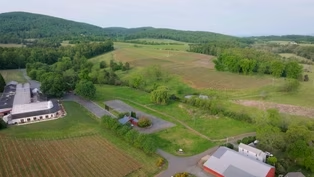
Video has Closed Captions
Clip: S26 Ep3 | 7m 45s | Tour the meadow at Barboursville Vineyards (7m 45s)
Video has Closed Captions
Clip: S26 Ep3 | 5m 9s | Get DIY tips for birdhouses (5m 9s)
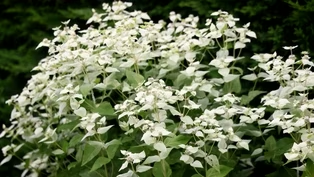
Video has Closed Captions
Clip: S26 Ep3 | 3m 32s | Start a meadow with just one plant (3m 32s)
Video has Closed Captions
Clip: S26 Ep3 | 5m 6s | Learn how to grow new plants from cuttings (5m 6s)
Video has Closed Captions
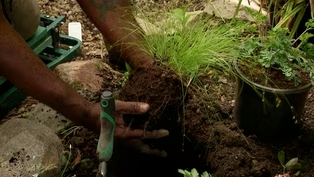
Clip: S26 Ep3 | 3m 56s | Discover grasses and flowering plants that flourish in shade (3m 56s)
Providing Support for PBS.org
Learn Moreabout PBS online sponsorship

- Home and How To

Hit the road in a classic car for a tour through Great Britain with two antiques experts.

 New Episode








Support for PBS provided by:
Virginia Home Grown is a local public television program presented by VPM