

June 23, 2026 - PBS News Hour full episode
6/23/2026 | 57m 46sVideo has Closed Captions
June 23, 2026 - PBS News Hour full episode
June 23, 2026 - PBS News Hour full episode
Problems playing video? | Closed Captioning Feedback
Problems playing video? | Closed Captioning Feedback
Major corporate funding for the PBS News Hour is provided by BDO, BNSF, Consumer Cellular, American Cruise Lines, and Raymond James. Funding for the PBS NewsHour Weekend is provided by...
June 23, 2026 - PBS News Hour full episode
6/23/2026 | 57m 46sVideo has Closed Captions
June 23, 2026 - PBS News Hour full episode
Problems playing video? | Closed Captioning Feedback
Where to Watch PBS News Hour
PBS News Hour is available to stream on pbs.org and the PBS app.
Providing Support for PBS.org
Learn Moreabout PBS online sponsorshipAMNA NAWAZ: Good evening.
I'm Amna Nawaz.
GEOFF BENNETT: And I'm Geoff Bennett.
On the "News Hour" tonight: The U.S.# insi.. allow U.N.
nuclear inspectors back into# their country, despite Tehran's denials.
AMNA NAWAZ: A decade after Brexit,## the United Kingdom takes stock of its# vote to break from the European Un.. ROB BENSON, Kingfisher Seafoods: I actually# voted to leave, but, obviously, we were never## told the truth as to what the consequences were# going to be.
And now the consequences are out.
GEOFF BENNETT: And how major# changes to federal student## loans could reshape repayment for millions.
(BREAK) GEOFF BENNETT: Welcome to the "News Hour."
Iran and the U.S.
are once again at odds today,## this time over inspections of Iran's nuclear# facilities.
Iran says no deal is in place.
AMNA NAWAZ: While, for their part, President# Trump and his aid said again today that the## U.N.
nuclear watchdog will inspect Iran's# facilities.
It was just one of several## disagreements since the weekend meetings in# Switzerland between the Americans and Iranians,## the first round of negotiations since a# new cease-fire deal was struck last week.
Nick Schifrin begins our coverage.
NICK SCHIFRIN: In the Strait of Hormuz today,## a new plan to evacuate ships stranded by# war.
The U.N.
and Iran say hundreds of .. including tankers stuck in the world's most vital# oil choke point, will soon have free passage.
But Iran says the ships must register with# the new Iranian insurance company, setting## the stage for charging future fees in what Iran's# chief negotiator called the new postwar order.
MOHAMMAD BAGHER GHALIBAF, Chief Iranian Negotiator# (through translator): Everyone should know that## the administration of the strait will never# return.. NICK SCHIFRIN: But that was just the first example# today of the U.S.
and Iran's public disagreements.
MARCO RUBIO, U.S.
Secretary of# State: No country is allowed to## charge tolls or fees on an international waterway.
NICK SCHIFRIN: Tehran and Washington# also publicly disagreed on access to## Iran's nuclear sites.
There is no plan to let# international inspectors back into the country,## said Iran's Foreign Ministry spokesman.
ESMAEIL BAGHAEI, Iranian Foreign Ministry# Spokesman (through translator): We have not had## a meeting with the direct.. nor do we have any plans for an agency# inspection of Iran's nuclear facilities.
DONALD TRUMP, President of the United# States: They're wrong.
They know they're## wrong.
They told us inside, and we# have it down 100 percent .. And if they were right, I'd# cancel the meetings right now.
NICK SCHIFRIN: But President# Trump also today acknowledged## the inspectors would not arrive any time soon.
QUESTION: When will those inspectors# actually be on the ground?
DONALD TRUMP: At the appropriate# time.
At the appropriate time.## There's no rush.
But they will be on# the ground at the appropriate time.
NICK SCHIFRIN: And on whether Iranian# frozen assets could only be used by## American agriculture, as Vice# President Vance said yesterday: J.D.
VANCE, Vice President of the United# States: If Iranian assets are ever unfrozen,## they're going to go to make American farmers# richer and to feed the Iranian people.
ALI BAHREINI, Iranian Ambassador to the# United Nations: Iran is the only country## who will decide what to do with its# assets which are going to be de-frozen.
NICK SCHIFRIN: There's a he said/he# said aspect to these negotiations## and an ambiguity about their direction.
That# perhaps most concerns the U.S.'
Gulf allies,## who bore the brunt of Iran's wartime assaults.
Tonight, Secretary of State Marco Rubio# landed in the United Arab Emirates,## offering reassurance and urging patience.
MARCO RUBIO: All of our allies are# on board with peace.
Obviously,## it all depends on the details of that peace as# we work through it.
But it's a work in progress.## Good groundwork was laid over the last 72 hours,# but a lot of work remains to be done.
And we want## to hear from our partners.
We want to make# sure that their views are taken into account.
NICK SCHIFRIN: Iranian officials also engaged# in diplomacy today.
President Masoud Pezeshkian## visited mediator Pakistan, and Iranian officials# insisted again any deal must include Lebanon.
In Southern Lebanon today, the fragile cease-fire# between Israel and Hezbollah appears to be## holding, allowing many displaced Lebanese# to return to their homes, like Tarek Mroueh,## coming home for the first time in weeks, his# house in Nabatieh wrecked by Israel's assault.
He saves what he can, but the outside and# much of the neighborhood is destroyed.
TAREK MROUEH, Nabatieh, Lebanon, Resident# (through translator): In the end, we have## nowhere else.
This is our home, afte.. the war flares up again, if it flares up again, of# course I will naturally take my family to a safe## place.
But the point is, we now certainly# have greater hope that the war will stop.
NICK SCHIFRIN: There is hope that the war is over,## but there's still disagreement# over what peace might look like.
For the "PBS News Hour," I'm Nick Schifrin.
GEOFF BENNETT: Well, Congress never# authorized the military action in Iran,## but the U.S.
Senate today voted to limit President# Trump's Iran war powers in a rare rebuke.
White House correspondent Liz Landers# caught up with senators on both sides## of the aisle on this issue of# the Iran war and joins us now.
So, Liz, what are Republicans saying about# this 14-point agreement with Iran signed## by the Trump administration and the ongoing talks?
LIZ LANDERS: Yes, so we have seen some fractures# in the Republican Party on this conflict and on## this agreement, and that was reflected in# the conversations I had on the Hill today.
I talked with Senator Thom Tillis.
He's a# lame-duck senator retiring at the end of## this year.
He's sparred with the president.# And I asked him about these sanctions that## were lifted yesterday by the Treasury Department.# And he said that, if what Nick laid out in that## piece is true, that Iran is going to buy U.S.# agricultural products, he said that's fine.
But he says that if the U.S.
is lifting these# sanctions on Iran that predate even the Obama## era Iran deal, that, until that happens, the# U.S.
-- or until the U.S.
is closer to a deal,## he does not think that that's a good# idea.
Here's more on him being asked## about whether this conflict has been worth it.
SEN.
THOM TILLIS (R-NC): An# estimated $100 billion spent today;## 13 service members lost their lives.# Over 360 people have been injured.## That doesn't include the collateral and# physical damage of our partners.
If all## we do is get back to the JCPOA, that would# be an absolute catastrophe, in my opinion.
The investment that we made,# I expect a much higher return## than just getting back to where# we were with different language.
LIZ LANDERS: There's another part# of the Republican Party, though,## that wants to give President Trump the benefit# of the doubt and time to negotiate this.
I also caught up with Senators Rounds and# Kennedy, who are a bit more wait and see.
SEN.
MIKE ROUNDS (R-SD): He wants peace.
He# wants peace in the Middle East.
He's made## that very, very clear.
We have got to give the# president an opportunity to get his work done,## while at the same time making clear# that none of us trust the Iranians.
SEN.
JOHN KENNEDY (R-LA): We won't know# for 60 days.
I think it's clear that## the MOU is two things.
Number one, it was# an agreement to have the oil flow.
And,## number two, it was a deal to try to make a deal.
GEOFF BENNETT: Meantime, Liz, you have# the GOP-controlled Senate voting today## to cut off the U.S.
military campaign against# Iran.
They are approving this anti-war measure,## followed by the Republican-controlled# House recently.
Bring us up to speed.
LIZ LANDERS: This passed in the House# recently, and then today the Senate## took this symbolic vote largely.
It is a# resolution, so the enforceability of this## is in question.
And there were some senators# who acknowledged that on the Hill today.
But it is a rebuke of the president.
There were# 50 senators who voted against -- voted for the## measure, I should say, telling the president to# end the war.
And there were four Republicans that## joined Democrats.
There was one Democrat# who voted against it, Senator Fetterman.
But this did pass both of these chambers.# The -- whether the president has any sort## of enforceability on this, we will see going# forward.
But this is a rebuke of him nonetheless.
GEOFF BENNETT: You also spoke with, heard# from Republicans in leadership today?
LIZ LANDERS: Yes, I spoke with Senator John Thune,## who is the Republican leader.
He too has had# a few differences with the president of late.
And I asked him about the congressional oversight# aspect of this Iran deal.
Here's what he told me.
What is Congress' role in approving whatever# comes out of this deal with Iran in 60 days?## What do you hope the Senate will do?
SEN.
JOHN THUNE (R-SD): If there# is some deal that is struck,## I would expect at some point Congress# would have some sort of vote on it.
And## I whether -- that's a resolution of disapproval# or something, I don't know the answer to that.
LIZ LANDERS: I also caught up with Senator# Wicker -- he is the chairman of the Armed## Services Committee -- and asked him about that# sanctions relief that Iran is now experiencing.## He paused for a moment and said: "I# don't think they're entitled to any## sanctions relief whatsoever,# and I'm disappointed, he said.
GEOFF BENNETT: What about what about# Democrats?
What are they saying about all this?
LIZ LANDERS: Democrats have been# largely opposed to the war since## it started and also to this memorandum of# understanding since this came out last week.
I caught up with Senator Andy Kim and also Senator## Angela Alsobrooks about these sanctions# and overall their feeling of this MOU.
SEN.
ANDY KIM (D-NJ): Absolutely not a good# deal.
I mean, this is a good deal for Iran.## This is a good deal for a brand-new grand# ayatollah, who is younger and more hardened,## more in line with the Iranian Quds Force.# This is a strategic failure.
And this is## something that we're going to have to# -- we're going to pay the price for.
SEN.
ANGELA ALSOBROOKS (D-MD): None of us# trust, we cannot trust now and never trusted## the leadership of this president, who took us into# a war without a plan, didn't know how to get us## out of the war.
And the people who are paying for# this war are the hardworking people of America.
LIZ LANDERS: Senator Alsobrooks# acknowledged that, as the party## in the minority right now, the Democrats can't# do too much, but she was encouraging voters,## if they don't like what they're seeing with# these policies, to go out and vote November.
GEOFF BENNETT: So a range of views among# lawmakers, and this is as the Trump administration## is asking Congress for $80 billion, an extra $80# billion supplemental funding to pay for this war.
LIZ LANDERS: There has been this reporting# just that came out in the last 24 hours or so,## and I asked President Trump about# this in a very short phone call.## I just got one question to# him this morning on the phone.
And I said, why should the American people# support spending more money on this conflict?## And why is this costing so much?
He told me# -- quote -- "Because Iran will never have a## nuclear weapon.
It's simple.
Iran will never# have a nuclear weapon.
That's not costing much## at all.
That's very cheap compared to what# we're doing.
Iran will never have a nuclear## weapon.
Iran will never be able to use a# nuclear weapon.
And if you don't do it,## then they will have a nuclear weapon,# and then you will see real money."
I asked a Democratic Senator, Catherine Cortez# Masto, about this on the Hill.
Will Congress## approve $80 billion in supplemental# funding?
And she said to me, look,## she said if the war is no longer on and# there's this cease-fire that's in place## right now, then why do they need the# supplemental funding and more money?
Geoff, I think that's a question we're going# to hear on the Hill in the coming days.
GEOFF BENNETT: Liz Landers, a busy# day for you at the White House,## on Capitol Hill.
Our thanks to you and our# politics producer, Kyle Midura.
Appreciate it.
LIZ LANDERS: Yes, of course.
AMNA NAWAZ: For more on the# U.S.
negotiations with Iran,## we turn now to Ernest Moniz.
Trained as# a nuclear physicist, he was secretary of## energy during the Obama administration and# was a chief architect and the lead technical## negotiator of the 2015 Iran nuclear agreement# known as the Joint Comprehensive Plan of Action,## or JCPOA.
He's now chief executive officer of# EFI Foundation, which focuses on energy policy.
Secretary Moniz, welcome back to the# "News Hour."
Thanks for joining us.
ERNEST MONIZ, Former U.S.
Energy Secretary:# Good to be back.
Thank you, Amna.
AMNA NAWAZ: So I want to start with your# reaction to this back-and-forth on the## issue of nuclear inspectors.
Yesterday, Vice# President Vance said Iran had agreed to allow## access to the IAEA to nuclear sites.# Today, Iranian officials are saying## that is just not true.
What do you make of# Vance's statement and the Iranian response?
ERNEST MONIZ: Well, first of all, the# issue could not be more important, frankly.
Frankly, since 2015 to this day, we have# always said that the most important part## of the nuclear dimensions of the JCPOA were in# fact the extraordinary verification measures,## and those hinge entirely upon# access by the IAEA inspectors.
So, when the vice president says that# the inspectors can come back into Iran,## that's not so special, nor is it special that# they have access to the Iranian declared nuclear## sites.
That's important.
But even more# important, which the JCPOA did have in it,## is that the inspectors could go to places# that Iran had not declared as nuclear sites,## but that the inspectors had reason to# believe may have had nuclear activity.
So it's the covert -- the# covert sites.
And, furthermore,## it's -- we're a long way from that# stage, obviously, given the exchange## that you referred to.
But, furthermore,# I believe that this negotiation has to at## least replicate what came out in 2015, namely,# that Iran agrees to the additional protocol.
That means that the inspectors can go to# sites that have not been declared by Iran,## but, furthermore, that there is a finite# time window for granting that the access.## It was 24 days in 2015.
No other# country has such a restriction.
It is absolutely critical that the inspectors# have access to potential covert sites and to have## access to them quickly enough to prevent major# cleanups of those sites before they inspect.
AMNA NAWAZ: So, to match the verification that# was in place for the previous nuclear deal,## they would have to guarantee access to even those## non-declared covert nuclear# sites, is what you're saying.
Also, on the issue of the highly enriched# uranium, the essential ingredient for a## nuclear weapon here, there was specific language# in the memorandum of understanding that was signed## that said the two nations had agreed to resolve# the disposition of stockpiled enriched material.
How can that be done?
What# would you expect to see when## the technical negotiations continue on this issue?
ERNEST MONIZ: There's two distinct issues here.
One is that, first of all, Iran, in# contrast to the situation in 2015,## had over the last few years enriched# uranium to a very high level, the 60## percent.
To give you a scale, 90 percent# enrichment is considered weapons-grade.
But I caution that you don't need weapons-grade# uranium to make a bomb; 60 percent uranium -- 60## percent enriched uranium is in fact quite adequate# to make a bomb.
You need a bit more material## than you would with 90 percent.
That's why the 60# percent enriched uranium is so sensitive, it's so## critical, because that material actually was the# last piece that Iran historically did not have in## its possession in order to make a bomb if it chose# to do so, which I don't believe they have, OK?
But resolving that issue is the absolute, in# my view, first order of business with regard## to enriched uranium.
Where is it?
What condition# is it in?
What is the risk.
Get rid of the risk,## probably by having the IAEA inspectors oversee# dilution of that material back to a very,## very low enrichment, which# would not present a danger.
AMNA NAWAZ: As you well know, these talks# are now being led by Vice President Vance,## Special Envoy Steve Witkoff, Jared# Kushner.
There are, of course,## technical teams involved in the# details of these negotiations.
But you have sat across the table from the# Iranians.
You know what it is to negotiate in## the nitty-gritty.
Are you confident that the right# people are negotiating for the American side to## see through these verification measures that you# say are necessary to at least match the JCPOA?
ERNEST MONIZ: Well, I think the question, of# course, is how they use the technical people,## who they will need to answer various questions.
I mean, those people exist, for example, in# the Department of Energy National Laboratories.## In 2015, when I was negotiating, we used# the National Laboratory scientists very,## very heavily.
To be perfectly honest,# we used the time difference between## Switzerland and California very# effectively in order to be able## to have those scientists carry out# all the analyses that we wanted.
Now, the place -- so that's a question of the## negotiators being skillful not# only in negotiating with Iran,## but skillful in using the technical assets that# are available to the United States government.
Now, the advantage I did have, being,## of course, trained as a physicist, was that# I knew which questions to ask.
And that was## a much more efficient way of carrying forward# the negotiation, perhaps a more effective way.
AMNA NAWAZ: There is this 60-day timeline they# have set, with the possible extension if needed.
But how confident are you that a detailed# agreement can be reached within those 60 days?
ERNEST MONIZ: Well, I have to be very skeptical# that a detailed agreement can be reached in## that time.
And, of course, one can ask, how# important is it to have a detailed agreement?
My answer to that would be, it's very# important, specifically because ambiguity## is something that can be manipulated, skirted by# the Iranians in particular.
And that's why the## agreement in 2015 was over 150 pages' long.# Sure, we had the same assurances up front## that the MOU has, namely that Iran committed to# never acquiring or developing a nuclear weapon.
But our mantra was, OK, fine, but we don't trust,# and verify.
So that's why the verification was## so important.
And that's why the don't# trust was reflected in the fact that we## followed every rabbit hole, basically, to block# ambiguities that could lead to the development## of a weapon or at least to approach# the threshold of having a weapon.
And I believe that that is an essential# element, and I do not see how that could## be done in 60 days unless a lot of groundwork# has already been done, which I'm not aware of.
AMNA NAWAZ: That is former U.S.
Secretary# of Energy Ernest Moniz joining us tonight.
Secretary Moniz, thank you so much# for your time.
Really appreciate it.
ERNEST MONIZ: Thank you, Amna.
GEOFF BENNETT:## In the day's other headlines: The U.S.# Supreme Court today ruled against a former## Louisiana inmate who attempted to sue prison# officials for shaving off his dreadlocks.
In a 6-3 ruling, the justices found that Damon# Landor, a devout Rastafarian, could not sue## for money even if his religious rights were# violated.
Writing for the minority, Justice## Ketanji Brown Jackson warned the decision could# weaken federal religious protections in prisons.
In a separate case, the court will allow# ExxonMobil to sue Cuban state-owned## companies over property on the island# that was seized under Fidel Castro.
And## the justices sided today with the Trump# administration in an immigration case,## strengthening the government's power to# deport green card holders accused of crimes.
The Justice Department has reportedly# withdrawn grand jury subpoenas to## reporters at The Washington Post and The# Wall Street Journal.
The Associated Press## and others are reporting that the# subpoenas were issued earlier this## year as part of the administration's# broader crackdown on media leaks.
A spokesperson for The Washington Post called# the subpoenas a -- quote -- "clear violation## of constitutionally guaranteed press freedom.
"# Speaking to reporters after an unrelated press## conference, acting Attorney General Todd Blanche# didn't say why the subpoenas were revoked,## but he vowed to continue investigating what# he called breaches of national security.
In France, officials say an ongoing heat wave# is responsible for at least 40 drowning deaths## in recent days as people seek ways to cool off.# The country recorded its hottest day ever today,## with temperatures soaring above 100# degrees Fahrenheit in some areas.## That's affected schools and train service and# even forced the Eiffel Tower to close early.
Locals are rushing to buy electric fans and air## conditioners as temperatures are set# to remain high for a few more days.
SEVERINE LE BEUZIT, Paris Resident (through# translator): Paris when temperatures go high## is just hell on earth.
It's catastrophic.
I'm# worried for the coming years.
We have kno.. about climate change for a while, and not one# government is making progress on this issue.
GEOFF BENNETT: The extreme temperatures# are affecting millions across the region,## including in Britain, where train service has# been disrupted and hundreds of schools were## closed for the day.
British authorities# issued a rare extreme heat warning,## and forecasters are expecting# all-time highs for the month of June.
The NFL denied a bid by quarterback Brendan Sorsby# to hold a supplemental draft this year, meaning## he won't have a chance to enter the league in the# fall.
That follows the 22-year-old's legal battle## with the NCAA, which ruled him ineligible after he# made thousands of bets during his college career.
In a letter published by multiple media# outlets today, the NFL said his petition## failed to -- quote -- "demonstrate# accountability for your conduct or## indicate whether or how you would adhere# to the league's rules."
The NFL instead## encouraged Sorsby to try its regular draft next# year.
His lawyer called the decision unlawful.
And turning now to the World Cup,# Portugal's Cristiano Ronaldo is now## the first player to score a goal in six# different World Cups.
The 41-year-old set## the mark with his first of two goals against# Uzbekistan today, as Portugal went on to win## 5-0.
Ronaldo scored his first World Cup# goal back in 2006 in a game against Iran.
Separately today, the Homeland# Security Department said it's## easing travel restrictions# on this year's Iran team.## Players can arrive two days ahead of their# next match, rather than the day before,## but they will still have to leave the U.S.
right# after.
They next play Egypt on Friday in Seattle.
On Wall Street today, stocks struggled on# the latest sell-off in big tech shares.## The Dow Jones industrial average posted# a small loss of just 45 points, but the## Nasdaq shed nearly 600 points, or more than 2# percent.
The S&P 500 also ended sharply lower.
Still to come on the "News Hour": why the# U.S.
student loan repayment system is about## to undergo a major overhaul; Georgia farmers# struggle with a major drought as climate## change makes weather less predictable;# and a new book details the hardships## faced by Ukraine's LGBTQ community as# they navigate the realities of war.
Today is the 10th anniversary of the most# divisive day in Britain's recent history,## Brexit, its vote to leave the European Union.# Voters were promised a Britain free of European## laws, decreased immigration, and a major boost to# business without the E.U.
's economic constraints.
But, as Malcolm Brabant reports from# Blackpool in the northwest of England,## leave and remain voters have one thing# in common.
They're not celebrating.
MALCOLM BRABANT: June 2016, when Britain# was split almost right down the middle,## as 52 percent of the country demanded# a divorce from the European Union.
MAN: I believe England's better# off by itself because we have## the drive and tenacity to make up# for any of the so-called benefits.
WOMAN: Out.
Definitely out.
QUESTION: Out.
OK, do you want to talk about it?
WOMAN: Shut that bloody tunnel up, Mike.
WOMAN: There's too many of them.# They're taking over, literally,## our houses, our jobs, literally taking over.
NIGEL FARAGE, Reform Party# Leader: Let June the 23rd## go down in our history as our independence day.
(CHEERING) once Britain's leading seaside resort,# whose residents distinguished themselves## by generating the biggest pro-Brexit# vote in Northwestern England.
MAN: We should never have left, to be# honest with you.
The world's gone to pot,## really.
I just got a feeling that we shouldn't# have left.
We should go back into it.
WOMAN: For a long time now, ever since this# change, I think we have gone downhill.
Britain## has totally gone downhill.
Everything# is overexpensive.
It's absolutely crazy.
MALCOLM BRABANT: Ten years after the referendum,# Britain remains a painfully disunited kingdom,## and a significant number of Brexit# voters regret their decision on that day.## One of Britain's leading polling companies says# that 56 percent of the electorate would vote to## rejoin the European Union if given a chance.
And# that includes 22 percent of those who voted leave.
Rob Benson is full of regret.# Like so many post-Brexit,## Benson's business lost access to European# markets, as the E.U.
punished Britain with## a swathe of bureaucratic obstacles.
In# these sandy shores north of Blackpool,## Benson farmed shellfish, popular in Spain# and France, generating $4 million a year.
But after Brexit, the enterprise collapsed.
ROB BENSON, Kingfisher Seafoods:# I actually voted to leave, but,## obviously, we were never told the truth as to what## the consequences were going to be.
And now# the consequences are out, it's too late.
MALCOLM BRABANT: How angry are you?
ROB BENSON: Very.
Oh, yes, very angry.# It's t.. MALCOLM BRABANT: The abiding# face of Brexit is Nigel Farage,## whose uncompromising campaign against the# European Union catalyzed the referendum.
NIGEL FARAGE: It was about getting# back control of our country,## getting back control of our borders.# They have given us record levels of## immigration.
We are literally living# through a population explosion.
MALCOLM BRABANT: History will also judge# Boris Johnson's short-lived premiership## as the driving force behind the legislation# delivering Brexit.
Now a newspaper columnist,## Johnson is toasting Brexit's anniversary.
BORIS JOHNSON, Former British Prime Minister:# Evening everybody; 10 years after that historic## Brexit referendum, I feel more convinced# than ever that the British people were## heroic and magnificent and did the right thing in# voting for freedom and democratic independence.
ROB BENSON: I think prison is too good for them,## to be truthful, because# they just -- they just lied.
MALCOLM BRABANT: According to the Confederation of# British Industry, the nation's economy has shrunk## by about 8 percent since Brexit was enshrined in# law.
When we visited this northwest cheese factory## before Brexit was sealed, the owners exported# to 40 different countries and hoped to expand.
But the business went bust,# and 30 people lost their jobs,## thanks in no small part to the# imposition of European tariffs.
Henri Murison is chief executive of a lobbying# group called the Northern Powerhouse Partnership.
HENRI MURISON, CEO, Northern# Powerhouse Partnership:## The economic evidence is pretty clear that our# businesses have suffered from lack of access## to European markets.
So having left the single# operating economic model of the European Union,## we now have more barriers to trade, and that# has definitely held back businesses here.
DIMITRIS PAPADIMITRIOU, Professor of Political# Science, University of Manchester: Brexit## has been a tremendou.. MALCOLM BRABANT: Political scientist Dimitris## Papadimitriou is a vice dean# of Manchester University.
DIMITRIS PAPADIMITRIOU: The political# and economic turmoil that has ensued has## definitely made people feel that Britain# is not a first-class power anymore.
MALCOLM BRABANT: For Europhiles,# Blackpool embodies a self-inflicted wound,## especially as it's one of Britain's# most poverty-stricken boroughs,## as the graffiti says, dreaming of better# days.
Brexit deprived the town of European## funds intended to boost its economy by,# for example, restoring Blackpool's tribute## to the Eiffel Tower and smartening up a# seafront that lures millions each year.
LYNN WILLIAMS, Leader, Blackpool Council: That# type of work costs an absolute fortune.
So to## lose access to that funding was a real major blow# for us.
And, as a consequence, we're only now,## 10 years on, starting the other necessary# works to the promenade and the seafront.
MALCOLM BRABANT: Lynn Williams of Britain's# governing Labor Party heads Blackpool Council.## She's striving to secure government# grants to replace lost European funding.
Blackpool's money troubles were# exacerbated by lockdowns during## the COVID pandemic.
And Williams# believes that the trickle-down of## economic hardship has fueled the# rise of right-wing politicians.
LYNN WILLIAMS: That was the start, really,# of that kind of populist politics of,## we have to leave, we have to be an island.
PROTESTERS: We want our country back!
LYNN WILLIAMS: Ten years on, we are now seeing# this particular rise of that type of politics,## which is -- I think is a# direct consequence of Brexit.
MALCOLM BRABANT: Lynn Williams' barb is# aimed at the politics of Mark Butcher,## a foot soldier of Nigel Farage's right-wing# anti-immigrant reform party.
Butcher runs a## soup kitchen for Blackpool's poorest,# including homeless military veterans,## whom he says are treated# worse than illegal immigrants.
MARK BUTCHER, Parliamentary Candidate,# Reform U.K.
: We never really got Brexit## in the first place, so it was a# betrayal from the Conservative## Party.
They didn't deliver the# Brexit that we signed up for.
MALCOLM BRABANT: And Butcher fears that,# 10 years on, Brexit is still insecure.
MARK BUTCHER: They're now wanting to# get us back into Europe, completely## ignoring the 17.4 million people that we# wanted out.
And out meant out meant out.
MALCOLM BRABANT: Regretful leave voter rob# Benson survived his shellfish company's## Brexit-induced collapse by servicing offshore# wind farms instead.
In the marina where he## moors his new boat, there's a mockup of# the Titanic.
Benson likens Brexit to an## iceberg and hopes that growing aspirations# to reconcile with Europe will gain traction.
ROB BENSON: I'd love to rejoin, because,# if we rejoined, we have had a taste of## what it's like trying to do it without.
It# doesn't work, not for us.
It really doesn't.
MALCOLM BRABANT: To the dismay of# Brexiteers, the Labor government## has been working to repair ties with the E.U.# But following yesterday's resignation of Prime## Minister Keir Starmer, it's unclear just how# much closer Britain and Europe will become.
MAN: We now come to Andy# Burnham, member from Makerfield.
MALCOLM BRABANT: Newly reelected M.P.
Andy# Burnham, who's expected to succeed Starmer, is## vague on what kind of relationship he wants.
But# Burnham has been explicit about ending the divide## between England's richer south and poorer north.# And that's good news for this seaside resort.
For the "PBS News Hour," I'm# Malcolm Brabant in Blackpool.
GEOFF BENNETT:## Federal student loans will undergo major# changes starting July 1.
The changes will## not only restructure the loan system, but also# repayment options for millions of Americans.
Stephanie Sy tells us more.
STEPHANIE SY: Geoff, some borrowers might see# higher monthly payments.
Others will have to deal## with stricter caps on how much they can borrow,# and there will be fewer loan forgiveness options.
Four key revisions include an increase in interest# rates for most loans.
One benefit, a discount of## 1 percent for eligible borrowers who enroll in# autopay.
The elimination of the Biden era SAVE## Plan, which affects 7.5 million borrowers, and new# borrowing caps for graduate and Parent PLUS Loans.
For more on how all these changes will# further impact folks and their finances,## I'm joined by Danielle Douglas-Gabriel, national# higher education reporter for The Washington Post.
Danielle, welcome to the "News Hour."
So let's jump right in with this new# discount being offered to borrowers.## Is 1 percent going to make a dent for a lot of# folks?
What should we know about that benefit?
DANIELLE DOUGLAS-GABRIEL, The Washington Post:# Certainly, over the lifetime of the loan,## it does make a difference in terms# of how much you end up paying.
Unfortunately, this is only good for two years,# for people who are hoping that this is for the## life of the repayment cycle, but it could mean# it make a significant difference for people who## have higher interest rates and for people who# have larger loans.
So it's worth looking into.
STEPHANIE SY: So, a big question is# what happens to these seven million## folks that were on the Biden era# SAVE Plan.
That ends on July 1.## Critics of this plan, of course, said it# overpromised, it was too generous.
But## millions of borrowers plan their budgets around# it and saw those monthly payments skyrocket.
Do the new replacement options# out there help those folks out?
DANIELLE DOUGLAS-GABRIEL: For some borrowers,## it won't be that much of a difference# in their pay repayment plan... for many borrowers, it's -- it could be# a pretty significant jump in their bill.
Keep in mind that almost half of the people# who were on that SAVE Plan had incomes low## enough that they qualified for zero# monthly payments.
That's not going## to be the case on the payment plans# that they will have to switch into.
Even with the new repayment plan that's# coming online July 1, you still have to pay## $10 a month.
And there are a lot of# borrowers I have spoken to who said that## they certainly cannot fit another payment# in their household budget at this time,## when they're dealing with inflation in# grocery prices, gas prices, and the like.
So it's going to be a tough# road ahead for some borrowers## who are on the lowest income of the SAVE Plan.
STEPHANIE SY: So would you expect that you would# continue to see defaults on student loans go up,## as we have been seeing for# the last few years anyway?
DANIELLE DOUGLAS-GABRIEL: I think there's a# real risk of that right now.
We have a pretty## high delinquency and default percentage# at this stage.
I think there are about## nine million people who are in default on their# student loans who are behind by several months.
And a lot of economists are worried that# switching all of these borrowers out for of## SAVE and just people moving into some of these# new repayment plan options could increase that## spike.
Certainly, the Department of Education# is trying to get the message out.
They have## been e-mailing borrowers, they have been# notifying them of these coming changes,## the need to switch out of SAVE for several months.
I do think that this interest subsidy# that's in play for two years, the autopay,## is another way to try to encourage borrowers# to go back into consistent repayment and to## stay current on their loans.
Will it be# successful?
I think it's too soon to tell,## but it's certainly something worth watching as# -- over the next six months as we start to see## borrowers migrate out of some of these# plans into some of these newer options.
STEPHANIE SY: Danielle, I'm hearing a lot of# borrowers, online especially, expressing their## frustrations that they really don't know what to# do next, that they don't really trust the system## anymore, and that they feel like the rules have# changed enough that they're not sure what to do.
Here's what one woman said on TikTok.
CAYLIE PORTER, Student Loan Borrower: I have# no idea what the heck I'm supposed to do.
I'm## going and looking at some of these repayment# plans, and some of them look a little insane,## some of them not terrible, but I# don't know what I'm committing to.
And then I'm trying to get online and get more# information.
None of this stuff makes sense to me.
STEPHANIE SY: So this new Repayment Assistance# Plan, or RAP, has been described, as you know,## by the Department of Ed as a simpler income# plan.
Is it simpler -- income repayment## plan.
Is it simpler?
And will the new system# help or further hurt low-income borrowers?
DANIELLE DOUGLAS-GABRIEL:# I think that's debatable.
Certain features of the RAP plan,# there has been research that shows,## especially I think coming out of American# University, that some lower-income borrowers,## because of an interest subsidy that's attached# to the RAP plan where, if you make consistent## monthly payments on time, the government will pay# whatever unpaid interest is still accruing on the## loan, that could help some low-income# borrowers pay off their loans faster.
But there's also a great concern that,# because of the structure of the plan,## you could see a rise in defaults and delinquencies# for low-income borrowers who simply cannot## even keep up with the $10 payment, which is a# possibility and a reality for many Americans.
So it's difficult to say if# it's so much easier than what## has existed.
It is certainly not as# generous as what SAVE was offering,## which was much lower monthly payments and a# much faster path to forgiveness.
But this is## effectively the government trying to# split the difference to help people.
But we certainly could see a lot of people# repaying their loans for longer.
Keep in mind## that, under this new income-driven repayment plan,# it'll take 30 years of payments before you see the## remaining balance forgiven.
That's different# than the 20 or 25 years that currently exists,## and that's definitely different than# the decades' worth of payments that SAVE## was willing to let borrowers off for# them if they had low balances in total.
So this is not quite as generous as what# we have seen in the past.
In some ways,## it is very beneficial to some populations,# but it could be very detrimental to others## who have in the past and may continue to# struggle in repaying their student loans.
STEPHANIE SY: Quickly, Danielle, can you talk# about loan forgiveness and where that stands?
DANIELLE DOUGLAS-GABRIEL: It still exists for# certainly for public servants through public## service loan forgiveness.
The existing# income-driven repayment plants also have## a forgiveness feature that is still in play,# oftentimes after 20 or 25 years of repayment.
So that is still an option for borrowers, just not# quite as widespread as what we'd seen in the past.
STEPHANIE SY: That is Danielle Douglas-Gabriel# with The Washington Post joining us.
That was very helpful.
Thank you.
DANIELLE DOUGLAS-GABRIEL: You're welcome.
AMNA NAWAZ:## More than half of the continental# U.S.
is facing drought.
Meanwhile,## in just the South this year, tens of millions# of people have been under flood watches.## These extreme weather conditions can have# major impacts on farmers and their crops,## at a time when they're already# facing high production costs.
Paul Solman recently traveled to# southern Georgia to hear from some## of those farmers.
It's part of our# continuing series Tipping Point.
PAUL SOLMAN: In Southeast Georgia, the# Berry family farming for generations,## their grandpa a sharecropper,# but, this spring, drought.
But your dad said you have never# seen a drought like this before.
CEDRIC BERRY, Farmer, Ludowici, Georgia: Right.
PAUL SOLMAN:.. CEDRIC BERRY: No, not in my .. I haven't.
Never heard of stories# of a drought this bad eith.. TONY BERRY, Farmer, Ludowici, Georgia: If we were# to plant on schedule in the heart of the drought,## we pretty much would have lost all those crops.
PAUL SOLMAN: One hundred and seventy# miles west, the opposite problem at## the 2,400-acre Longleaf Ridge Farm run by# sixth-generation farmer Casey Cox Kerr.
CASEY COX KERR, Longleaf Ridge# Farm: I wanted to come back and## build on the foundation that my parents had built.
PAUL SOLMAN: She too faces drought,# though, her part of Southern Georgia## finally did get rain a few weeks ago.
But# it was a downpour that menaced the crops.
CASEY COX KERR: It's not only does# it drown some of the plants.
It also## creates disease and pest problems.# We're seeing wetter wets and drier## dries.
And that can be a big challenge# with what we're experiencing on the floor.
PAUL SOLMAN: Wetter wets, drier# dries.
You won't be surprised to## hear this has something to do with climate change.
RACHEL CLEETUS, Union of Concerned Scientists:# It's affecting precisely those things that people## defend on for their livelihoods, their food,# their water supplies.
These are essentials.
PAUL SOLMAN: Rachel Cleetus of# the Union of Concerned Scientists.
RACHEL CLEETUS: Climate change is making these# more frequent, both the short-duration kinds of## droughts that we're seeing in some places, but# also the longer megadroughts like the Southwest## is experiencing.
The unpredictability of it, the# extremes, both the droughts and then the whiplash## with extreme rainfall events, that makes it very# difficult to plan for these kinds of conditions.
PAUL SOLMAN: During drought, ag Professor# Wes Porter of the University of Georgia says,## the local soil compounds the problem.
WES PORTER, University of Georgia: If you look in# our region where we're at now in Southern Georgia,## we have a really sandy soil.
So sandy soils can't# hold a whole lot of water.
So what that means,## we actually evaporated out# significantly higher amounts## of water than what we have received# back in.
So we were looking negative.
PAUL SOLMAN: Meanwhile, those# farmers now face punishing costs,## like diesel spurting up almost 50 percent# since the end of February.
And some seven## in 10 farmers say they now can't# afford rising fertilizer costs.
CEDRIC BERRY: I mean, now we would# normally be at market already.
And## we haven't -- haven't been.# Things just aren't ready.
PAUL SOLMAN: Now, both guys work full-time jobs,## Tony at the Port of Savannah.# Cedric's an electrician.
How much time do you get to spend here,# as opposed to on your regular jobs?
TONY BERRY: For me, two to# three days out of a week.
PAUL SOLMAN: And for you?
CEDRIC BERRY: Evenings and weekends.
PAUL SOLMAN: They help finance the farm with# their salaries.
The drought upped the cost.## The Berrys usually sell hay, for example, had# to hold some of it back to feed their cattle,## their own pasture parch-dry,# $10,500 in lost sales.
TONY BERRY: Fertilizer, fuel, those things like# that, that money would have covered that for sure.
PAUL SOLMAN: Is that $10,500,# that -- is that a substantial hit?
TONY BERRY: Oh, yes, sir.
I mean, if you want to# give me $10,500, then I ask you that question.
(LAUGHTER) never dreamed he'd wind up down on# the farm.
But with cousin Cedric: CEDRIC BERRY: We just naturally came# together and it's like, OK, well,## let's follow the family tradition and do this.
PAUL SOLMAN: Back across the state,# tradition brought Casey Cox Kerr back too.
CASEY COX KERR: Like, most things, a# little bit of time and perspective made## me realize how unique this farm is and# how special it is that I get to do this.
PAUL SOLMAN: But with a changing climate,# what hope is there for family farmers?
B.J.
WASHINGTON, CM Stripling Irrigation Research# Park: This technology is very vital to survival.
PAUL SOLMAN: Aha, technology, like precision# irrigation.
At the University of Georgia## Research Park, B.J.
Washington and team# are helping farmers conserve their water.
B.J.
WASHINGTON: You can program how much# water you put out.
You can program where it## needs to start and stop in the field.
You can# speed it up or slow it down within the field## to put out more water or less water.# You can do all that from this panel.
PAUL SOLMAN: Those big circles you see from# your airplane window seat created by center## pivot irrigation rigs like the ones here,# sprinkling water over crops slowly and evenly,## instead of spritzing it all at once.
And# these soil moisture sensors let the ground## itself signal just how much soaking# it needs so farmers don't overwater.
B.J.
WASHINGTON: Given the# drought, it's a huge deal,## because we want to we want to be as# efficient with irrigation as possible.## We don't want to waste water.
We don't# want to irrigate if we don't need to.
CASEY COX KERR: We could not grow what# we grow without irrigation because of## just the frequency of drought.
The new# irrigation systems, new technologies,## we're doing -- we're taking the# steps that we're able to take## to mitigate the risks that we can.
We# have to focus on what we can control.
PAUL SOLMAN: Which made me wonder, why isn't# everyone doing this?
One obvious answer,## it's not cheap.
The irrigation rigs cost at# least $90,000, the sensors up to $2,500 each.
But, says Professor Porter: WES PORTER: It looks like a big cost, but it's# costly for us to misapply our irrigati.. costly for us to lose yields because of that,# right?
And so I have a lot of return on investment## data that show that anywhere from on the low# end $20 to $30 per acre, all the way up to $150,## $200 per acre return for utilizing advanced# irrigation scheduling.
And that's per acre.
PAUL SOLMAN: So maybe data will get the# nation's farmers to change their ways,## and maybe farm tech will stay# ahead of further climate changes.
WES PORTER: Man, we have got this.
We can we# can adapt.
We can change.
We have been doing## it for a long time.
The way we farm today# might look different the way we farm in 100## years.
But I'm hoping that the work we're# doing today is helping build a foundation.
PAUL SOLMAN: And in the long run, Rachel Cleetus# says, there are policy steps worth considering.
RACHEL CLEETUS: And so we should, as a nation,# not leave farmers on their own to deal with this,## whether they can afford it or not.
We have# got to invest.
We have to make sure that## farmers are aware of the options that might# be there and that they get grants or low-cost## loans that they can maybe install some of these# technologies on their farms if they need them.
PAUL SOLMAN: Meanwhile, the Berrys keep# on pushing without pricey technology,## leaning on a tradition older than the farm.
TONY BERRY: We do put faith in our good lord that# he will provide a way, because he has done that## all these years before us, and I'm a strong# believer that he will continue to do that.
CEDRIC BERRY: We're doing the job that's# important, you know, providing the food for## surrounding communities, letting people know where# the food actually comes from.
And we need that.
And I just feel like, if we're# serving that purpose, he will provide.
PAUL SOLMAN: Well, he moves in mysterious ways.
CEDRIC BERRY: Definitely.
PAUL SOLMAN: For the Berrys, though,## mystery or not, wetter wets and drier# dries are an all-too-present re.. For the "PBS News Hour," Paul Solman.
GEOFF BENNETT: It has been more than four years# since Russia launched a full-scale invasion of## Ukraine.
And while the war has affected# the daily lives of nearly all Ukrainians,## life has been especially challenging# for members of its LGBTQ community.
Author and photojournalist J. Lester# Feder recent book chronicles some of## those lives.
Here's our conversation with him.
J. LESTER FEDER, Author, "The Queer Face of War:# Portraits and Stories from Ukraine": My name is## J. Lester Feder.
I'm.. And I'm the author of "The Queer Face of# War: Portraits and Stories from Ukraine."
LGBT people have been targeted in wars in# well-documented ways going back at least## as far as World War II.
But we don't have a lot# of stories about what actually happened to them,## because, in most wars, it hasn't been# safe for LGBT people to speak publicly.
So, when the war in Ukraine began, I immediately# went over there to begin interviewing people to## find out what issues they might be having.
And# we were particularly concerned, because Russia## had used so much anti-LGBT propaganda, that they# might be targeting queer Ukrainians on the ground.
I did not plan to do a book or# to do a photo project.
I assumed,## like the reporting I'd done in# Afghanistan or Iraq or Syria,## that people would not want to be photographed# or even necessarily share their full identities.## And I asked people if they could be# photographed really as an afterthought.
But people started saying yes.
And# when a number of people had said yes,## I realized that I was building what# I think is the first visual history## of a queer community in war.
So there isn't# one LGBT experience of war.
There are many.
And one of the reasons why I chose to do the# book as a series of vignettes of individual## people was to capture this range.
I talked# to one guy who was in the Army as a cook.## And I talked to drag queens in the military# administration supporting armed forces.
And## then there are the soldiers that are in# the trenches and really fighting directly.
And that's everything from Viktor Pylypenko,# who founded the LGBT military organization,## has spent most of the war on the front lines,# and has been quite accepted and celebrated for## his work, to a woman named Emilia, who is# transgender, joined the military initially## because she thought it was the only way that# she could afford gender-confirming surgery.
And then when she did finally start transitioning# after being an intelligence officer and spending## 10 years in the armed forces, her commanders# stripped her of her security clearance,## and ultimately she was forced to# leave the military altogether.
And this made me think a lot about the fights over## gay people being able to serve in# the military when I was a teenager,## and today the Trump administration's# efforts to remove trans people from service.
It's really important for marginalized# groups to be able to serve in the military,## because it is a way of demonstrating that there is# an ability to bear the full weight of citizenship,## and therefore they're entitled to# the full rights of as citizens.
And that denial of service is saying# that marginalized people are somehow## less than other citizens, they're# not truly equal, and, therefore,## can't make those demands.
And it's not just# the queer community that has recognized this,## but I also think about the civil rights movement# and African American soldiers coming back to the## United States and that being a real spark that# helped mobilize the civil rights movement here.
The treatment of queer people, like the# treatment of all marginalized groups,## is a real measure of the health# of a democracy.
One of the values## of democracy and pluralism is that it can --# has room for many different kinds of people,## and everybody can still be full citizens,# even though they're not the same.
Ukrainians are not different from Americans or# Europeans, in that the fight that they are having## to remain safe as a queer community in a democracy# that supports their rights is a global struggle,## because the model that Putin has perfected of# using homophobia to attack democracy is something## that we are seeing in otherwise healthy# democracies all over the world right now.
One of the activists that I spoke to# said there's really only two options## here.
Either Ukraine will be a democracy and# LGBT people will have rights, or it will be a## dictatorship and no one will have rights.
And I# think that really captures the stakes for today.
GEOFF BENNETT: As always,# there's a lot more online,## including three things Judy Woodruff says# she learned from speaking with Americans## across the country ahead of the USA's# 250th birthday.
That's at PBS.org/NewsHour.
AMNA NAWAZ: And join us back# here again tomorrow night,## when we will have the latest on primary# battles that could shape control of Congress.
And that is the "News Hour"# for tonight.
I'm Amna Nawaz.
GEOFF BENNETT: And I'm Geoff Bennett.
For all of us here at the "News Hour,"..
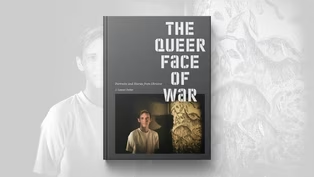
Book documents war experience for Ukraine’s LGBTQ+ community
Video has Closed Captions
'The Queer Face of War' chronicles hardships for Ukraine’s LGBTQ+ community during war (4m 42s)
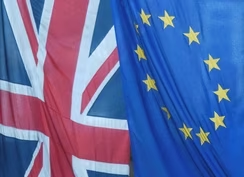
A decade after Brexit, UK voters reflect on break from EU
Video has Closed Captions
A decade after Brexit, UK voters reflect on decision to break from European Union (8m 32s)
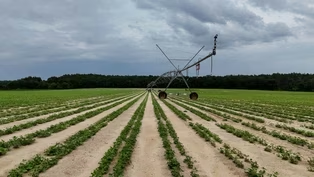
Farmers struggle as shifting weather patterns disrupt crops
Video has Closed Captions
Farmers struggle with crops as climate change makes weather less predictable (7m 45s)
How the federal student loan changes could impact borrowers
Video has Closed Captions
How the federal student loan changes could impact borrowers (6m 52s)
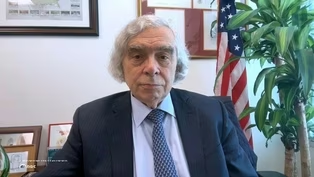
Moniz breaks down challenges of nuclear talks with Iran
Video has Closed Captions
Ex-Energy Secretary Moniz breaks down challenges of nuclear negotiations with Iran (8m 29s)
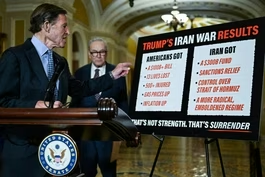
Senate votes to limit Trump’s war powers in Iran
Video has Closed Captions
In rare rebuke, Senate votes to limit Trump’s war powers in Iran (6m 27s)
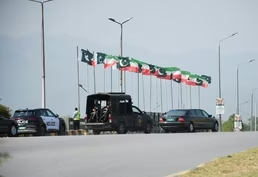
U.S. and Iran at odds over nuclear inspections
Video has Closed Captions
U.S. and Iran at odds over nuclear inspections, Strait of Hormuz fees (4m 7s)
Providing Support for PBS.org
Learn Moreabout PBS online sponsorship New Episode
- News and Public Affairs

Today's top journalists discuss Washington's current political events and public affairs.

- News and Public Affairs

FRONTLINE is investigative journalism that questions, explains and changes our world.
 New Episode
 New Episode
 New Episode
 New Episode
 New Episode
 New Episode

 New Episode
 New Episode
 New Episode
Support for PBS provided by:
Major corporate funding for the PBS News Hour is provided by BDO, BNSF, Consumer Cellular, American Cruise Lines, and Raymond James. Funding for the PBS NewsHour Weekend is provided by...